

Deriving from springs in a cliff almost 200 m high overlooking the plain, calcite-laden waters have created at Pamukkale (Cotton Palace) an unreal landscape, made up of mineral forests, petrified waterfalls and a series of terraced basins. At the end of the 2nd century B.C. the dynasty of the Attalids, the kings of Pergamon, established the thermal spa of Hierapolis in what is now Turkey. Source: UNESCO TV / © NHK Nippon Hoso Kyokai URL: http://whc.unesco.org/en/list/485/
Related Content
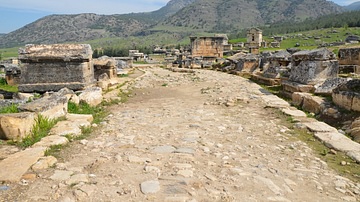
Roadway, Northern Necropolis of Hierapolis
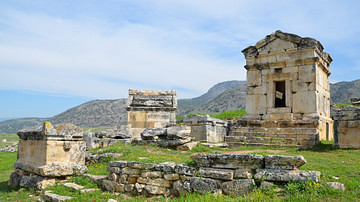
Northern Necropolis of Hierapolis, Phrygia
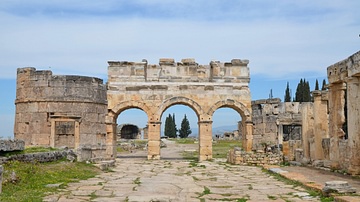
Frontinus Gate in Hierapolis, Phrygia
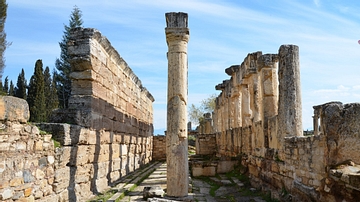
Roman Latrine, Hierapolis
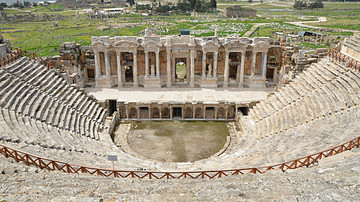
Roman Theatre of Hierapolis

10 Virtual Tours of Archaeological Sites & Museums in Turkey
Cite This Work
APA Style
Kyokai, U. T. N. N. H. (2018, September 13). Hierapolis-Pamukkale (UNESCO/NHK). World History Encyclopedia. https://www.worldhistory.org/video/1472/hierapolis-pamukkale-unesconhk/
Chicago Style
Kyokai, UNESCO TV NHK Nippon Hoso. "Hierapolis-Pamukkale (UNESCO/NHK)." World History Encyclopedia, September 13, 2018. https://www.worldhistory.org/video/1472/hierapolis-pamukkale-unesconhk/.
MLA Style
Kyokai, UNESCO TV NHK Nippon Hoso. "Hierapolis-Pamukkale (UNESCO/NHK)." World History Encyclopedia, 13 Sep 2018, https://www.worldhistory.org/video/1472/hierapolis-pamukkale-unesconhk/.
