
Search Images
Browse Content (p. 913)

Image
Rhodes Colossus, Reconstructed
A modern reconstruction of the Colossus of Rhodes, built c. 280 BCE. The colossus was 33 metre high statues was one of the Seven Wonders of the Ancient World.

Image
Kidwelly Castle, Reconstructed
Kidwelly Castle in Dyfed, Wales was first built as a wooden fortification in 1102 CE, by the Normans who had just arrived in modern-day Wales. The stone castle was built by the 1280s CE. This gif shows a reconstruction of the castle as...
Image
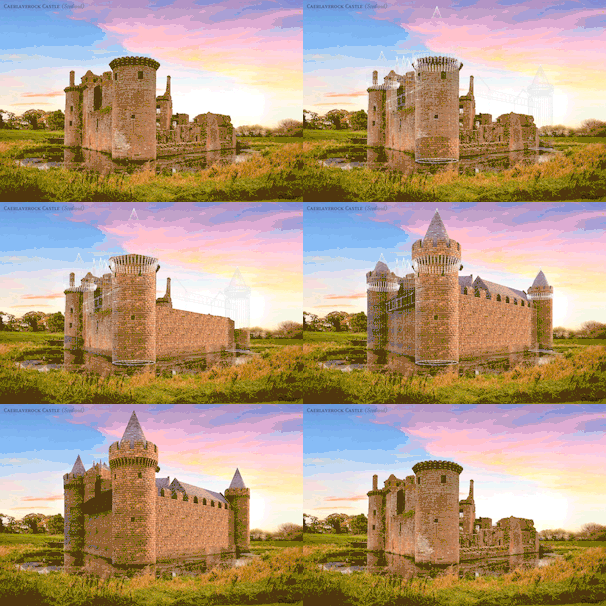
Caerlaverock Castle, Reconstructed
Caerlaverock Castle is a triangular, moated castle built in the 13th Century CE. The castle has been partially demolished and rebuilt numerous times over the centuries, but its unique shape has remained constant. Located in Dumfries and...
Image
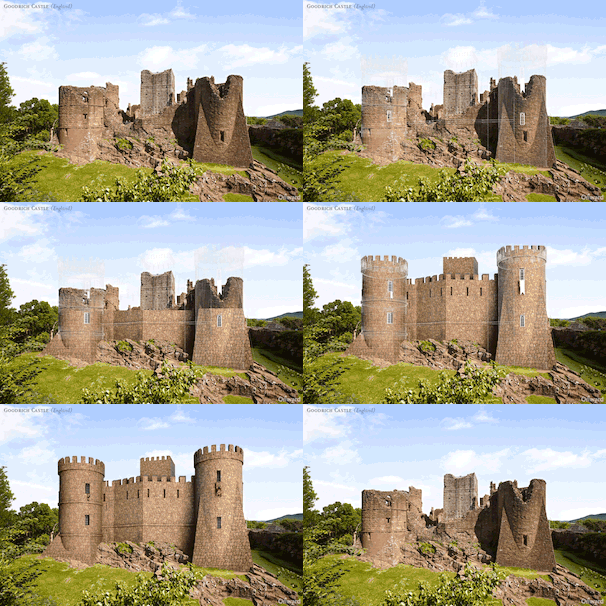
Goodrich Castle, Reconstructed
Goodrich Castle in Herefordshire, England was built in the 11th Century by Godric of Mappestone. The castle is considered one of the finest examples of Norman architecture, and influenced the designs of many later castles. It feel into...
Image
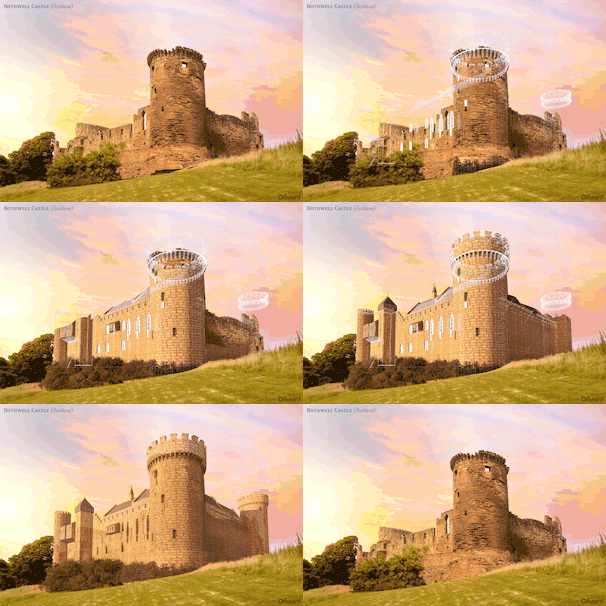
Bothwell Castle, Reconstructed
Bothwell Castle in South Lanarkshire, Scotland was built in the 13th Century CE, and the castle survived the Wars of Scottish Independence.
This gif shows a reconstruction of the castle as it would have looked upon completion.
Image
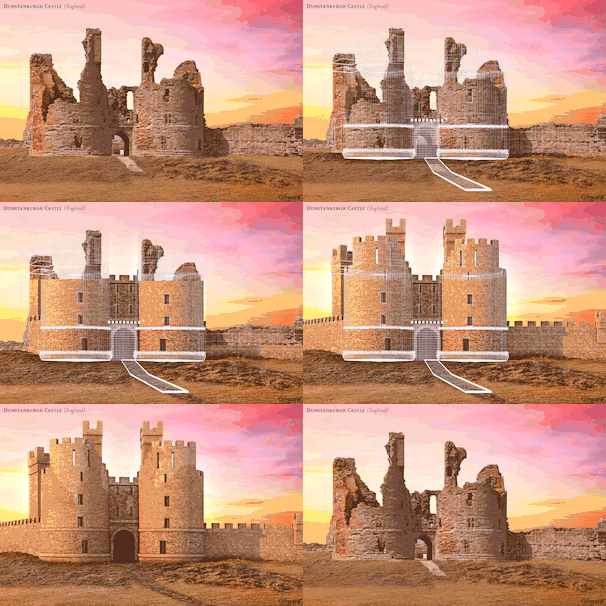
Dunstanburgh Castle, Reconstructed
Dunstanburgh Castle in Northumberland, England was built between 1313 and 1322 CE by Thomas Lancaster (c. 1278–1322 CE). The castle was heavily damaged during the Wars of the Roses (1455-1487 CE) and became increasingly ruined over the years...

Image
Dunluce Castle, Reconstructed
Dunluce Castle in County Antrim, Northern Ireland was built around 1500 CE. The castle was abandoned in 1639 CE, and the town surrounding the castle was abandoned just two years later. This gif shows a reconstruction of the ruined castle...

Image
Map of the Peloponnesian Wars (431-404 BCE)
This map shows Greece, Asia Minor and Sicily during the Peloponnesian Wars. The main powers of Athens, Sparta and their allies, as well as Achaemenid Persia and neutral states, are highlighted. Key battles are indicated by an X and military...
Image
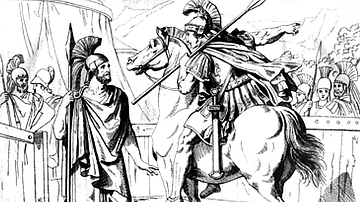
Aristides & Alexander I, 479 BCE
Alexander I the Philhellene visits the Greek camp, revealing Mardonius' battle plans to the Athenian general Aristides.
Source: M. A. Barth - 'Vorzeit und Gegenwart', Augsbourg, 1832 CE
Image
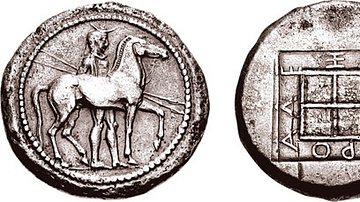
Coin Minted during the Reign of Alexander I of Macedon
Silver Oktadrachm, struck circa 465-460 BCE, representing a horseman holding two spears.
Classical Numismatic Group, Inc. http://www.cngcoins.com
