
Search Images
Browse Content (p. 485)
Image
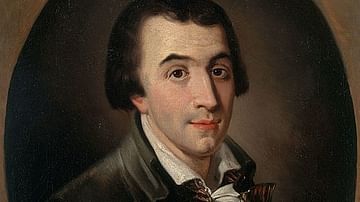
Portrait of Jacques-Pierre Brissot de Warville
Portrait of Jacques-Pierre Brissot de Warville (1754-1793), journalist and leader of the Girondist (Brissotin) faction during the French Revolution (1789-99). Painting by François Bonneville, c 1790.
Musée Carnavalet, Paris.
Image
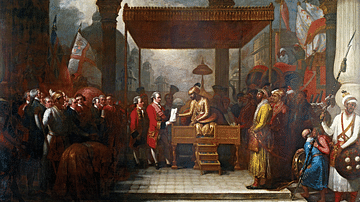
Robert Clive & Shah Alam
An 1818 painting by Benjamin West showing Robert Clive (1725-1774), Governor General of Bengal and representative of the East India Company, meeting the Mughal emperor Shah Alam in 1765 to gain tax collecting rights. (British Library, London...

Image
East Indiamen in a Gale
A c. 1759 painting by Charles Brooking East Indiamen in a Gale showing ships of the East India Company. (Royal Museums Greenwich)
Image
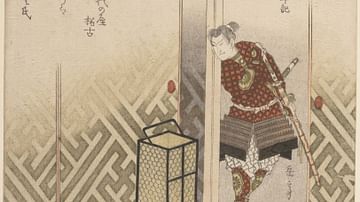
Taiheiki
Hino Kumawakamaru from the book Taiheiki, woodblock print by Yashima Gakutei, Japan, c. 1840.
Metropolitan Museum of Art, New York.
Image
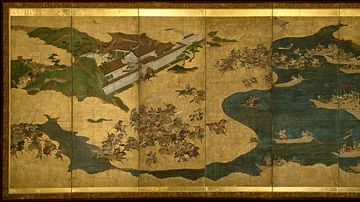
Heike Monogatari
The Battle of Yashima, from the Tale of the Heike (Heike monogatari), folding screen by an unknown artist of the Tosa School, Japan, 17th century.
Metropolitan Museum of Art, New York.
Image
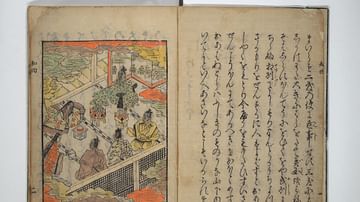
Soga Monogatari
Wada (Yoshimori's) Drinking Bout, an episode from Soga monogatari (Tale of the Soga Brothers), woodblock printed book with hand-colouring, by an unknown artist, Japan, c. 1624.
Metropolitan Museum of Art, New York.

Image
Sycamore Gap, Hadrian's Wall
Sycamore Gap on Hadrian's Wall is a section of the wall (Wall Mile 38) between two crests just east of Milecastle 39. It is locally known as the "Robin Hood Tree" for its use in the 1991 film Robin Hood: Prince of Thieves (1991).
Image
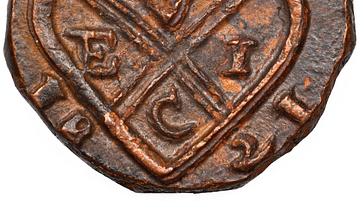
Copper Coin of the East India Company
A copper coin minted by the British East India Company (EIC). From Bombay, 1821.

Image
Sir Thomas Roe at the Court of Jahangir
The court of the Mughal emperor Jahangir (r. 1605-1627). Here in attendance at the court in Agra is Sir Thomas Roe (1581-1644) who secured permission for the East India Company the right to set up its first trading post at Surat on the west...

Image
Original Flag of the English East India Company
The original flag of the English East India Company (EIC), founded in 1600 by royal charter. The company later changed its name to the British East India Company and so the cross of St. George in the top right corner was replaced by a Union...
