
Search Images
Browse Content (p. 1913)

Image
Theatre of Argos
Built from the 4th to 3rd century BCE. Originally there were 81 rows of seats giving a total capacity of 20,000 spectators, making it the largest Greek theatre.
Image
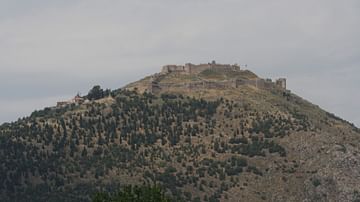
Acropolis of Argos
The Hill of Larissa, site of the ancient acropolis of Argos (6th to 5th century BCE). Visible today are the fortifications of the 10th century CE which incorporated some of the ancient polygonal walls, particularly on the north side.
Image
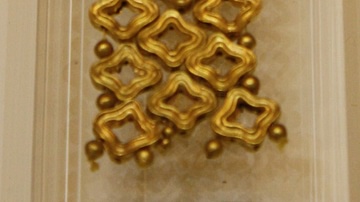
Mycenaean Beaded Bracelet
A string of gold beads (1500-1350 BCE) from Mycenae. Nafplio Archaeological Museum.

Image
Mycenaean Gold Jewellery Pieces
Strings of gold beads in the form of rosettes, papyrus and lillies from Mycenae area (14th century BCE). Nafplio Archaeological Museum.
Image
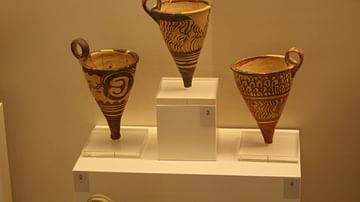
Mycenaean Rhyta
Three conical shaped rhyta (1500-1450 BCE) Mycenae area, Nafplio Archaeological Museum.

Image
Mycenaean Goddess
Terracotta figure of a goddess, Medea. Tiryns, 13th century BCE.

Image
Seating of the Theatre of Epidaurus
The theatre of Epidaurus was first built in the 4th century BCE and is possibly the best preserved ancient Greek theatre. Extensions were made in the 2nd century BCE taking its capacity to 12,000.
Image
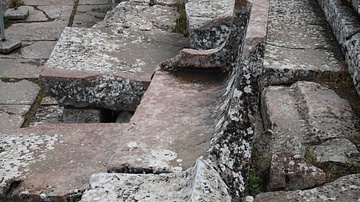
Backed Seat, Theatre of Epidaurus
A detail of a seat with back for dignitaries made of reddish stone, present in the front rows of each tier. (3rd century BCE).
Image
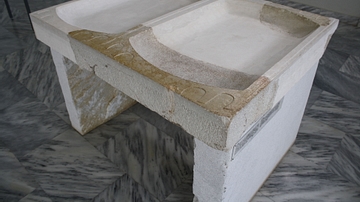
Sacrificial Table, Nemea
Restored stone table on which were placed the sacrificial offerings to the Gods in Greek religious practice. One tray was for the 'Epidaurian Gods' (Apollo & Esklepios), the other for Zeus. (c. 300 BCE). Nemea Archaeological Museum.

Image
Augustus as Pontifex Maximus (Detail)
Marble statue of Emperor Augustus (27 BC-34 CE) dressed in his role as the high priest Pontifex Maximus, Corinth Archeological Museum.
