
Search Images
Browse Content (p. 1846)

Image
Khmer Empire c. 900 CE
A map illustrating in red the Khmer Empire c. 900 CE.
Image
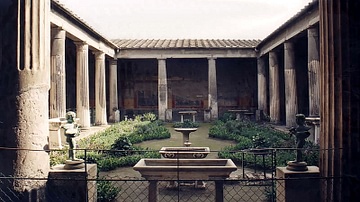
House of the Vettii, Pompeii
The peristyle of the house of the Vettii, Pompeii. The villa was preserved following the eruption of Vesuvius in 79 CE.

Image
The Ghana Empire
The Ghana Empire (6th-13th century CE) at its greatest extent is indicated in green.

Image
Doric Temple of Juno, Agrigento
The Doric temple attributed to Juno Lacinia but dating from c. 450 BCE, Agrigento, Sicily. The columns are a good example of entasis - the thickening at the base and centre of columns to give the optical illusion of being perfectly perpendicular...
Image
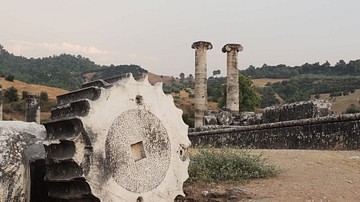
Column Drum with Flutes
A column drum with 24 flutes from the temple of Artemis, Sardis.
Image
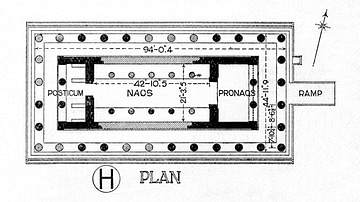
Plan, temple of Aphaia
A plan of the Greek temple of Aphaia, 500-480 BCE.
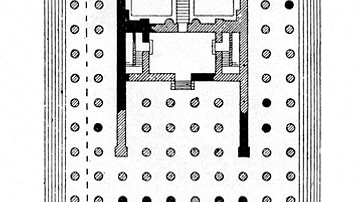
Image
Aerial View of the Temple of Apollo, Miletus
An aerial view (2011 CE) of the temple of Apollo Didymaeus at Miletus (late 4th century BCE).
Image
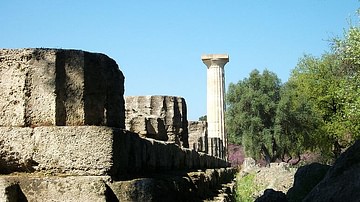
Crepidoma, Temple of Zeus, Olympia
The three steps of the crepidoma or crepis of the temple of Zeus at Olympia (457 BCE).
Image
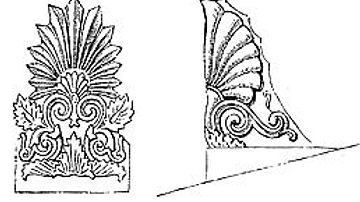
Akroterion
An akroterion (or acroterion), an architectural feature of Classical buildings, particularly temples where they were placed at the apex and extremities of the roof.

Image
Monolithic Columns, Corinth
The seven remaining columns of the Doric peripteral temple of Apollo at Corinth (550-530 BCE). The columns are monolithic, that is carved from a single piece of stone.
