
Search Images
Browse Content (p. 1766)

Image
Marriage of Inanna and Dumuzi
On this Sumerian relief, the marriage of the goddess Inanna and the Sumerian King Dumuzi is depicted.
Image
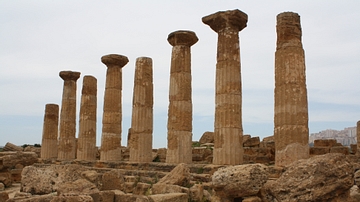
Temple of Hercules, Agrigento
The remaining columns of the Temple of Hercules, Agrigento, Sicily. Built in the 6th century BCE, the temple originally had 6 columns on each facade and 15 along the sides.

Image
Ahriman Statue Front View
Statue of Ahriman from a Mithraic Temple
Unknown provenance, 1st century BCE - 3rd century CE (not yet on display)
![Ahriman Statue Side View [2]](https://www.worldhistory.org/img/c/p/360x202/2631.jpg?v=1723047966)
Image
Ahriman Statue Side View [2]
Statue of Ahriman from a Mithraic Temple
Unknown provenance, 1st century BCE - 3rd century CE (not yet on display)
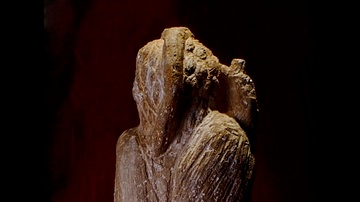
Image
Ahriman Statue Back View
Statue of Ahriman from a Mithraic Temple
Unknown provenance, 1st century BCE - 3rd century CE (not yet on display)
![Ahriman Statue Side View [1]](https://www.worldhistory.org/img/c/p/360x202/2630.jpg?v=1613703602)
Image
Ahriman Statue Side View [1]
Statue of Ahriman from a Mithraic Temple
Unknown provenance, 1st century BCE - 3rd century CE (not yet on display)

Image
Roman Cavalryman Reconstruction
A reconstruction model of a Roman cavalryman and horse. A helmet with moveable cheek-pieces, metal armour, long sword and lance were the typical equipment of Roman cavalry members. (Roman Museum Canterbury, UK).

Image
Mourning Scene, Roman Sarcophagus
A scene of mourning from a Roman child's sarcophagus. Marble, 2nd century CE, Roman cemetery at Agrigento, Sicily.
Image
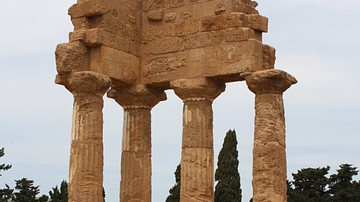
Temple of the Dioscuri, Agrigento
The remains of the Temple of the Dioscuri (Castor & Pollux), Agrigento, Sicily. The Doric temple, built between 480 and 460 BCE, originally had 6 columns on each facade and 13 along the longer sides.
Image
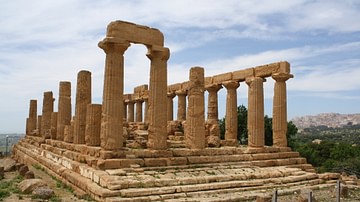
Temple of Juno, Agrigento
The Temple of Juno (Hera) at Agrigento, Sicily. The Doric temple was not in fact dedicated to Juno and acquired the name due to an error by a Latin author. Built between 450 and 440 BCE, the temple once had six columns on each facade and...
