
Search Images
Browse Content (p. 1534)

Image
Phoenician Oblelisk from Cyprus
The finely carved inscription on this obelisk dates to the 4th century BCE. The obelisk was set up in a cemetery at the Phoenician colony of Kition in Cyprus by a certain Arish in memory of his parent; his father Parz, who is said to have...
Image
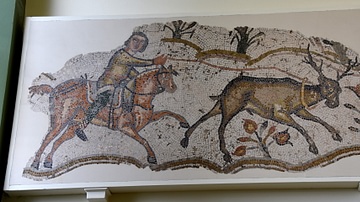
Hunting Mosaic, Carthage
This hunting scene from a mosaic pavement shows a horseman roping a stag. The pavement is one of a common North African type, depicting a favorite pastime of wealthy landowners. Since the horseman wears a Germanic dress, he has been identified...

Image
Floral Seasons Mosaic, Carthage
Floral trellis pattern mosaic with busts of the seasons in wreathed squares. From Carthage, modern-day Tunisia. Mid-2nd century CE. (The British Museum, London)
Image
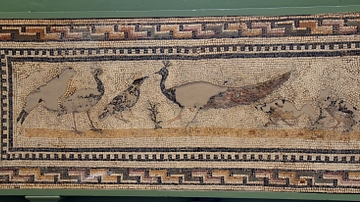
Peacock Mosaic, Utica
This mosaic wall shows a variety of birds, including a peacock within a meander border. From Utica, modern-day Tunisia. First half of the 3rd century CE. (The British Museum, London)
Image
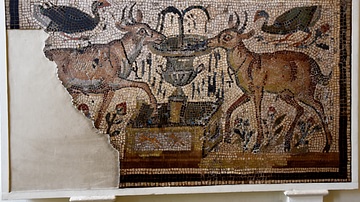
Deer Mosaic, Carthage
Tame deer drinking from an ornate fountain; this scene became popular in Early Christian art as symbolizing the fountain of life. From Carthage, modern-day Tunisia. 4th or 5th century CE. (The British Museum, London)
Image
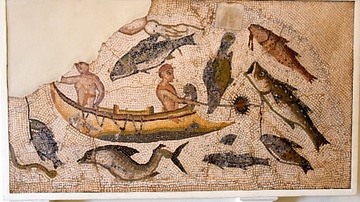
Fishing Mosaic, Utica
A fragment of a floor mosaic depicting a fishing scene. From Utica, modern-day Tunisia. Late 3rd or 4th century CE. (The British Museum, London)
Image
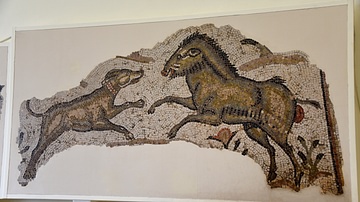
Hunting Mosaic, Carthage
This is part of a hunting scene from a pavement showing a boar confronting a hunting dog. The pavement is one of a common North African type, depicting a favourite pastime of wealthy landowners. From Carthage, modern-day Tunisia. Late 5th...

Image
Greek Diplomatic Delegation
An artist's impression of what a Greek diplomatic delegation may have looked like.

Image
Carthaginian Government
An artist's impression of what a scene from Carthaginian or Near Eastern government may have looked like.
Image
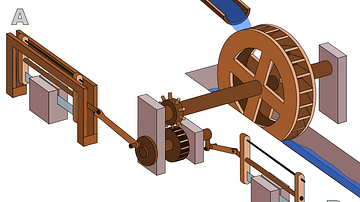
Roman Sawmill
An illustration of the Roman sawmill at Hieropolis. 3rd century CE.
