
Search Images
Browse Content (p. 1312)
Image
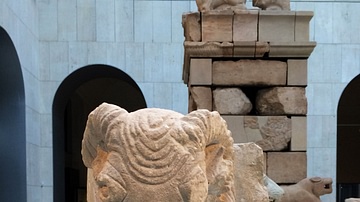
Iberian Ram Protome
Believed to be an architectural element, specifically a corbel supporting an architrave or adorning a door jamp, this ram protome is made of limestone and dates from the 2nd-1st century BCE. It comes from Osuna (Seville), Spain. (Museo Arqueológico...

Image
Lex Malacitana from Roman Málaga
This tablet is made of bronze and was made c. 81-96 CE in Málaga, Spain. The "Lex Malacitana" was a fundemental pillar of the new Hispano-Roman culture. In order to maintain order in the empire, Rome pased laws governing both public and private...
Image
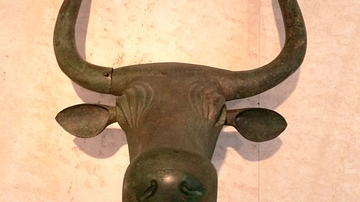
Ancient Bull from Costitx
This bronze bull was cast using the lost wax method. It is hollow inside with cold-etched details. The ears and horns were cast separately and riveted to the head. In some cases, the eyes were filled with vitreous paste. The bulls are interpreted...

Image
The Terracotta Army Panorama
The Terracotta Army which was buried near the tomb of Qin emperor Shi Huangdi, c. 210 BCE. There are up to 8,000 warriors, horses and chariots. Shaanxi Province, China.

Image
The Terracotta Army, Shaanxi Province
A row of life-size figures from the Terracotta Army buried near the tomb of Qin emperor Shi Huangdi, c. 210 BCE. Shaanxi Province, China.
Image
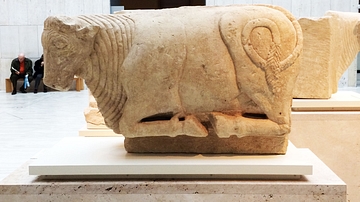
Iberian Bull Statue
This limestone statue of a bull comes from Osuna (Seville), Spain. It dates from the late 5th century CE. It was originally abutted to a funerary monument. Bulls were protectors of tombs, symbols of masculinity, and they were also associated...
Image
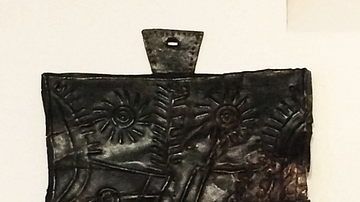
Celtiberian Pectoral Ornament
This Celtiberian pectoral ornament, which portrays a wild landscape replete with horses and stars, would have closed to form a carrying case. This specimen is made of bronze and dates to the 3rd-2nd century BCE. It was found in Arcobriga...

Image
Iberian Female Offerants
These offering bearers made from limestone are the most common type of representation found at the ancient Iberian Shrine of Cerro de los Santos (Montealegre de Castillo, Albacete) in Spain. These specimens date from the 3rd-2nd century BCE...
Image
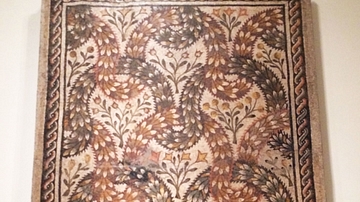
Hispano-Roman Plant Mosaic
This Hispano-Roman mosaic adorned the antechamber to a reception room at the Villa de Soto de Ramalete, which was a country villa in Tudela (Navarre), Spain. It is made of limestone and dates from the 4th century CE. The plant motifs, intertwined...
Image
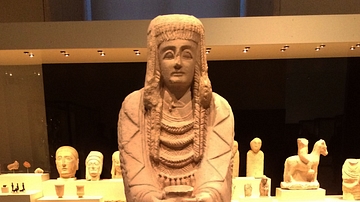
Great Lady Offerant
This almost life-sized female sculpture is carved in the round in an offerant pose. It dates from the 3rd century BCE, and it is ancient Iberian in origin. It was found at the Shrine of Cerro de los Santos (Montealegre del Castillo, Albacete...
