


The Agora (or market place) of Ephesos was first built in the 3rd century BC but was adapted over the Roman period to reach its final form in the early 3rd century AD. On a square plan (111m x 111m) the Agora was accessible through three separate gates and surrounded on three sides by storerooms. Originally, in the centre was a fountain and large number of statues of philosophers and administrators. Visible today are the columns of the Stoa of Nero, 1st century AD. In the left background is the facade of the Celsus library.
About the Author
Related Images
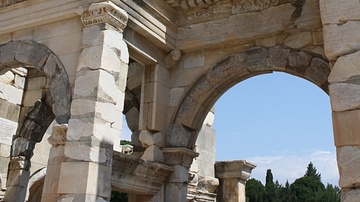
Agora Gate, Ephesos
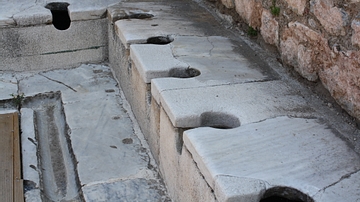
Roman Latrine, Ephesos
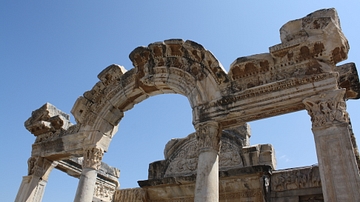
Temple of Hadrian, Ephesos
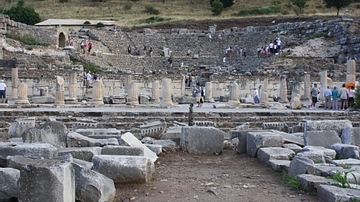
The Odeion, Ephesos
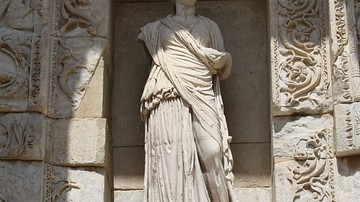
Sophia-Wisdom, Celsus Library, Ephesos
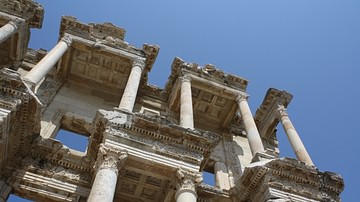
Celsus Library Facade, Ephesos
References
World History Encyclopedia is an Amazon Associate and earns a commission on qualifying book purchases.Cite This Work
APA Style
Cartwright, M. (2012, June 18). Roman Agora, Ephesus. World History Encyclopedia. https://www.worldhistory.org/image/699/roman-agora-ephesus/
Chicago Style
Cartwright, Mark. "Roman Agora, Ephesus." World History Encyclopedia, June 18, 2012. https://www.worldhistory.org/image/699/roman-agora-ephesus/.
MLA Style
Cartwright, Mark. "Roman Agora, Ephesus." World History Encyclopedia, 18 Jun 2012, https://www.worldhistory.org/image/699/roman-agora-ephesus/.
