
Celebrate Our Anniversary with Trivia!
Join us on August 23 for a free virtual trivia party featuring questions about ancient civilizations, U.S. history, unusual historical facts, pop culture, and more.


By his skinny body, overly large head, and short garment, the boy is characterized as a slave. It is very likely that the statue belonged to a large funerary monument in Tarentum. The boy probably looked up to the statue of his deceased master standing in a small funerary temple. Limestone. Acquired in 1881 CE. From the necropolis area at Tarentum, Italy. 3rd century BCE. It is on display at the Altes Museum in Berlin, Germany.
About the Author

Related Images

Mourning Scene, Roman Sarcophagus

Maria Theresa in Mourning Dress

Lady Olivia in Mourning
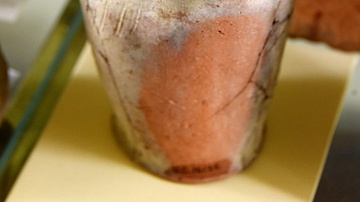
Egyptian Pot in the form of a Mourning Woman

Jews Mourning the Exile in Babylon
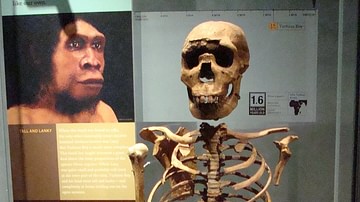
Turkana Boy
Cite This Work
APA Style
Amin, O. S. M. (2019, October 27). Mourning Slave Boy from Tarentum. World History Encyclopedia. https://www.worldhistory.org/image/11376/mourning-slave-boy-from-tarentum/
Chicago Style
Amin, Osama Shukir Muhammed. "Mourning Slave Boy from Tarentum." World History Encyclopedia, October 27, 2019. https://www.worldhistory.org/image/11376/mourning-slave-boy-from-tarentum/.
MLA Style
Amin, Osama Shukir Muhammed. "Mourning Slave Boy from Tarentum." World History Encyclopedia, 27 Oct 2019, https://www.worldhistory.org/image/11376/mourning-slave-boy-from-tarentum/.
