
Search
Did you mean: Bes?

 This answer was generated by
 Search Results

Definition
Yurt
A yurt (ger in Mongolian) is a large circular tent made of wool felt stretched over a wooden frame used by nomadic peoples of the Asian steppe since before written records began. Yurts are especially associated with Mongol herders and hunters...
Definition
Runes
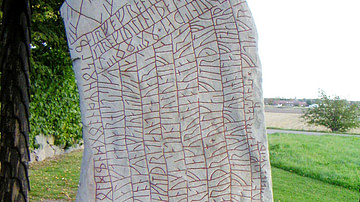
Runes are letters in the runic alphabets of Germanic-speaking peoples, written and read most prominently from at least c. 160 CE onwards in Scandinavia in the Elder Futhark script (until c. 700 CE) and the Younger Futhark - which illuminated...

Definition
Ögedei Khan
Ogedei Khan (aka Ogodei) ruled the Mongol Empire from 1229 to 1241. He was the third son of Genghis Khan (r. 1206-1227), the empire's founder. Ogedei's accomplishments included creating a new capital at Karakorum, establishing a system of...

Article
Food & Drink in the Mongol Empire
The diet of the Mongols was greatly influenced by their nomadic way of life with dairy products and meat from their herds of sheep, goats, oxen, camels, and yaks dominating. Fruit, vegetables, herbs, and wild game were added thanks to foraging...

Article
Roman Expeditions in Sub-Saharan Africa
Sub-Saharan Africa was explored by Roman expeditions between 19 BCE - 90 CE, most likely in an effort to locate the sources of valuable trade goods and establish routes to bring them to the seaports on the coast of North Africa, thereby minimizing...
Image
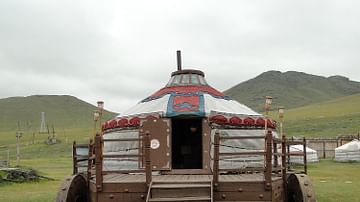
Wagon Yurt or Khibitkha
A wagon yurt or khibitkha. This type of yurt (or ger), used by nomadic Asian steppe peoples like the Mongols, was permanently mounted on a wagon so that it could be easily moved from camp to camp.
Image
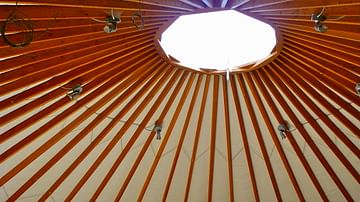
Yurt Interior
The interior of a traditional yurt or ger tent. Made from wool felt stretched over a wooden frame, the tents were used by nomadic Asian steppe peoples like the Mongols.
Article
Phoenician Names
Phoenician names are generally composite words with a specific meaning. The naming of children had a significance in the Ancient Near East that is difficult to understand nowadays. By choosing a name for their child, the parents could not...
