
Search
Did you mean: Valerian?
Search Results
Image
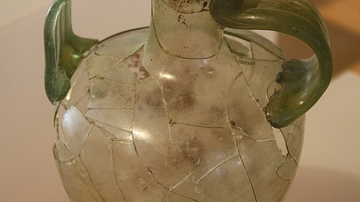
Roman Two-Handled Glass Vase
A Roman two-handled glass vessel. 4th century CE, from the Necropolis de l'Avinguda de la Constitucio, Valencia. (Archaeological Museum, Valencia, Spain)

Article
Medieval Cures for the Black Death
The Black Death is the 19th-century CE term for the plague epidemic that ravaged Europe between 1347-1352 CE, killing an estimated 30 million people there and many more worldwide as it reached pandemic proportions. The name comes from the...

Article
Religious Responses to the Black Death
The Black Death of 1347-1352 CE is the most infamous plague outbreak of the medieval world, unprecedented and unequaled until the 1918-1919 CE flu pandemic in the modern age. The cause of the plague was unknown and, in accordance with the...

Article
The Printing Revolution in Renaissance Europe
The arrival in Europe of the printing press with moveable metal type in the 1450s CE was an event which had enormous and long-lasting consequences. The German printer Johannes Gutenberg (c. 1398-1468 CE) is widely credited with the innovation...

Article
Boccaccio on the Black Death: Text & Commentary
The Black Death is the name given to the plague outbreak in Europe between 1347-1352 CE. The term was only coined after 1800 CE in reference to the black buboes (growths) which erupted in the groin, armpit, and around the ears of those infected...

Article
Global Trade in the 13th Century
In the 13th century, astonishing quantities of spices and silk passed from the Far East to Europe. Exact amounts are not known, but spice popularity in both cuisine and medicine reached its historical peak during the Middle Ages in Europe...

Article
Plague in the Ancient & Medieval World
The word 'plague', in defining a lethal epidemic, was coined by the physician Galen (l. 130-210 CE) who lived through the Antonine Plague (165 - c. 180/190 CE) but the disease was recorded long before in relating the affliction of the Plague...

Article
Plagues of the Near East 562-1486 CE
Disease has been a part of the human condition since the beginning of recorded history – and no doubt earlier – decimating populations and causing widespread social upheaval. Among the worst infections recorded is the plague which is fairly...

Image
Map of the Taifa Kingdoms of al-Andalus (c. 1031–1086) - Iberian Peninsula on the Eve of the Almoravid Intervention
The political fragmentation of al-Andalus began with the collapse of the Umayyad Caliphate of Córdoba (756–1031), culminating in its formal dissolution in 1031. In the power vacuum that followed, the Iberian Peninsula fractured into dozens...
Image
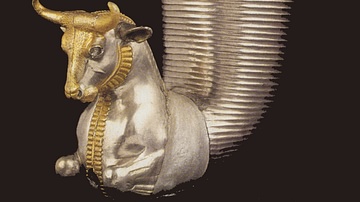
Bull Rhyton from the Borovo Treasure, Regional Museum of History - Ruse
Silver-gilt bull rhyton from the Borovo treasure. First half of the 4th century BCE. Regional Museum of History - Ruse. Photo: Nikolay Genov in the catalogue of the exhibition Los Tracios. Tesoros enigmáticos de Bulgaria, Barcelona-Valencia-Madrid...
