
Search
Did you mean: Ariadne?
Remove Ads
Advertisement
Search Results
Image
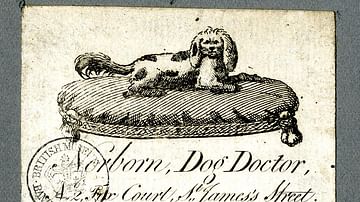
Trade Card of a Veterinary Surgeon
Trade card of Norborn, veterinary surgeon.
c. 1760-1818 CE.

Article
Indian Ocean Trade before the European Conquest
Finding a maritime route to the East and gaining access to the lucrative spice trade stood at the root of the European Age of Exploration. However, when Vasco da Gama rounded the Cape of Good Hope and...

Article
The Spice Trade & the Age of Exploration
One of the major motivating factors in the European Age of Exploration was the search for direct access to the highly lucrative Eastern spice trade. In the 15th century, spices came to Europe via the Middle...

Article
The Salt Trade of Ancient West Africa
Salt from the Sahara desert was one of the major trade goods of ancient West Africa where very little naturally occurring deposits of the mineral could be found. Transported via camel caravans and by boat along...

Article
Caesarea Maritima's Role in the Mediterranean Trade
Caesarea Maritima was located on the eastern coast of the Mediterranean Sea. Built from the ground up in 22-10 BCE by Rome's client king, Herod the Great (r. 37-4 BCE), its location in relation to ship...

Article
Eyes on the East: Chronicles of the Indian Ocean Spice Trade
As the 15th century ended, Europeans were still mostly in the dark about the Eastern world. Early travelers like Marco Polo had given the West tidbits of information, but these accounts were...

Video
Trade in Ancient Greece
In the video below, Museum of Fine Arts curator Phoebe Segal explains how ancient coins tell us about the trade routes and economic patterns of their time. For more CitiesX content, sign-up for the course on edX: https://www.edx.org/course/citiesx-past-present-future-urban-life-harvardx-urban101x...

Video
Trade and Economics in the Middle Ages
The history of medieval trade.
Article
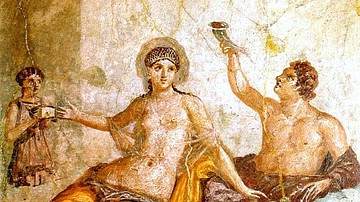
The Eastern Trade Network of Ancient Rome
The life of wealthy Romans was filled with exotic luxuries such as cinnamon, myrrh, pepper, or silk acquired through long-distance international trade. Goods from the Far East arrived in Rome through two corridors...

Article
Paul's Journeys and the Mediterranean Trade
Mediterranean trade increased exponentially at the turn of the first millennium. During Rome's zenith, goods of all sorts began to move in all directions. As a common traveler aboard merchant ships, Paul...
