
Search
Remove Ads
Advertisement
Search Results

Article
Sugar & the Rise of the Plantation System
From a humble beginning as a sweet treat grown in gardens, sugar cane cultivation became an economic powerhouse, and the growing demand for sugar stimulated the colonization of the New World by European powers, brought slavery to the forefront...

Article
Daily Life in Colonial America
Life in Colonial America was difficult and often short but the colonists made the best of their situation in the hopes of a better life for themselves and their families. The early English colonists, used to purchasing what they needed, found...

Article
Origins of World Agriculture
Agriculture arose independently at several locations across the world, beginning about 12,000 years ago. The first crops and livestock were domesticated in six rather diffuse areas including the Near East, China, Southeast Asia, and Africa...

Article
Rosalind Franklin - Equal Co-Discoverer of DNA?
The structure of deoxyribonucleic acid (DNA) was discovered in 1953 by two molecular biologists, James Dewey Watson (1928-2025) and Francis Harry Compton Crick (1916-2004). Watson and Crick were awarded the Nobel Prize in Physiology or Medicine...

Article
Women in the American Revolution
In Colonial America, women were discouraged from taking an interest in politics and were instead expected to focus only on traditionally 'feminine' matters, such as homemaking and childrearing. However, such gender roles were challenged during...
Article
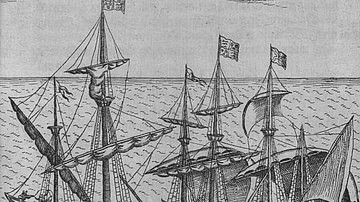
The Sea Dogs - Queen Elizabeth's Privateers
The sea dogs, as they were disparagingly called by the Spanish authorities, were privateers who, with the consent and sometimes financial support of Elizabeth I of England (r. 1558-1603 CE), attacked and plundered Spanish colonial settlements...

Article
Youth of George Washington
The youth of George Washington (1732-1799), the first President of the United States, remains the least understood chapter of his life, shrouded in folklore and myths. Yet the experiences of his youth, and the bond he felt toward his older...
Article
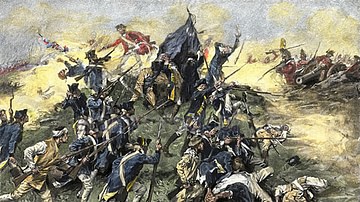
Siege of Savannah
The Siege of Savannah (16 September to 20 October 1779) was a significant engagement in the American Revolutionary War (1775-1783). Hoping to retake Savannah, Georgia, which had fallen to the British the previous year, a Franco-American force...

Article
Hidatsa Sun Dance Ritual
The Hidatsa Sun Dance Ritual (also known as Hidatsa Sun Dance) is a Native American story of the Hidatsa nation illustrating the practice of an individual initiating the Sun Dance for personal reasons, in this case, to win the hand of the...

Article
The Bear Man
The Bear Man is a Pawnee legend exemplifying the Native American understanding of the natural world and serving as an origin tale for the Bear Dance, which was performed to awaken the bears in spring from their winter hibernation and also...
