
Search
Did you mean: Sparta?
Remove Ads
Advertisement
Search Results
Image
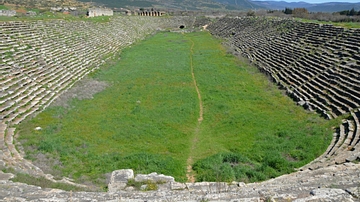
The Stadium of Aphrodisias
The Stadium is one of Aphrodisias' most remarkable surviving buildings. It was 270 m long and 59 m wide with 30 rows of seats. It had the capacity of 30,000 spectators. It is one of the best preserved ancient stadiums and also one of the...

Image
Greek Chariot Racers
Greek chariot racers from the base of a funerary kouros, later included in the Themistokleian Wall of Athens. 510-500 BCE. (National Archaeological Museum, Athens)
Image
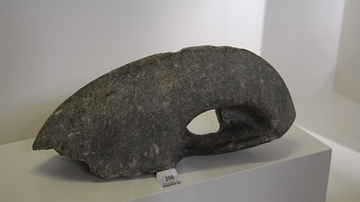
Stone Halter
A jumping weight carried by athletes in each hand in the long jump event to gain distance (date unknown). Olympia Archaeological Museum.
Image
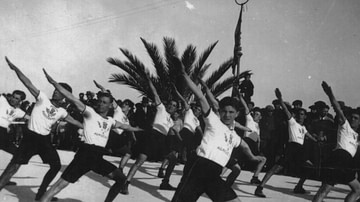
Gymnastic Show Performed by a Group of Balilla
A c. 1923 photograph showing a public gymnastic show performed during the Italian fascist period by the Sciacca-Agrigento section of the Opera Nazionale Balilla. (Riggio Family Archives)
Image
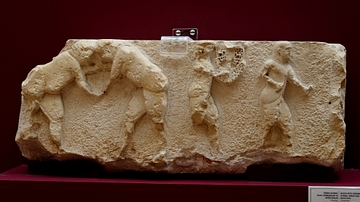
Limestone Block Showing Wrestlers and Musicians from Xanthos
On the left, two men are wrestling while on the right there are two musicians; the musician on the left seems to play the lyre. Archaic Period, late 6th century BCE. From Xanthos, Kınık, in modern-day Turkey. (Museum of Archaeology, Istanbul...
Image
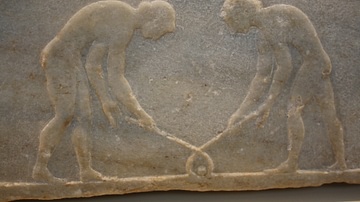
Greek Hockey Players
Greek athletes playing a game similar to modern hockey. From the base of a funerary kouros, later included in the Themistokleian Wall of Athens. 510-500 BCE. (National Archaeological Museum, Athens)
Image
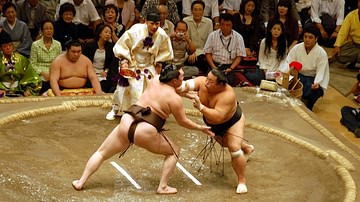
A Sumo Wrestling Bout
A sumo wrestling bout where many of the pre-contact rituals derive from Shinto practices.
Image
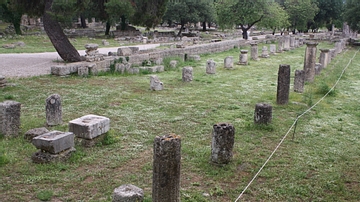
Gymnasion of Olympia
The Gymnasion was built in the second century BCE and was used as a training ground for the javelin, discus and running athletes.
Image
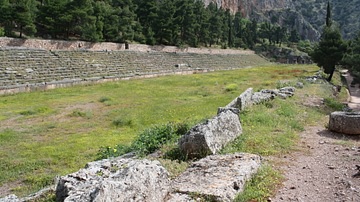
Stadium, Delphi
The stadium of Delphi, orginally built in the 5th century BCE, the stone seats visible today were added in the second century CE.
Image
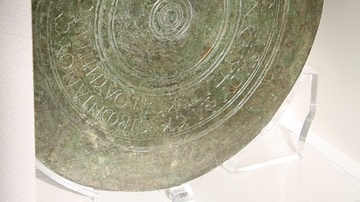
Bronze Discus
An inscribed bronze discus from Olympia dedicated by Publius Asklepiades (After 241 CE). Olympia Archaeological Museum.
