
Search
Did you mean: Sif?
Remove Ads
Advertisement
Search Results

Definition
Naram-Sin - The God-King of Akkad
Naram-Sin (reign 2254-2218 BCE) was the last great king of the Akkadian Empire and the grandson of Sargon the Great (reign 2334-2279 BCE), who founded the empire. He is considered the most important Akkadian king after Sargon (or, according...

Definition
Kim Yu-sin
Kim Yu-sin (aka Kim Yushin, 595-673 CE) was a general of the Silla kingdom which ruled south-eastern Korea during the Three Kingdoms Period. Kim would greatly help Silla unify Korea, famously leading a massive army to crush the rival kingdom...
Article
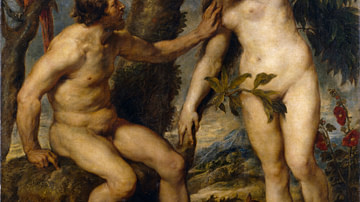
The Christian Concept of Human Sexuality as Sin
In the ancient world, human sexuality was crucial for the survival of the tribe and clan as well as pleasurable, a gift from the gods. Thousands of native cults emphasized fertility through rituals and prayers, and ancient gods were depicted...

Image
Stele of the Akkadian king Naram-Sin
According to the inscription on the diorite piece of stele, it belongs to King Naram-Sin. It was found in Pir Hüseyin, a village near Diyarbakır. As it shows the borders of the Akkadian State in the era of Naram-Sin and reflects the artistic...
Image
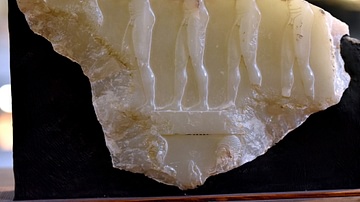
Naram-Sin Victory Stele from Wasit
This alabaster stele (with different registers) was fragmented when originally found and only three fragments have survived; two are in the Iraq Museum in Baghdad and one is in the Museum of Fine Arts, Boston, USA. The stele commemorates...
Image
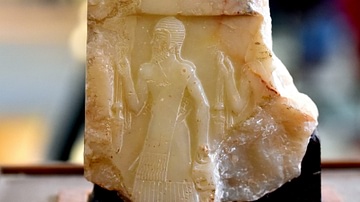
Akkadian Soldier on Naram-Sin Victory Stele from Wasit
This alabaster stele (with different registers) was fragmented when originally found and only three fragments have survived; two are in the Iraq Museum in Baghdad and one is in the Museum of Fine Arts, Boston, USA. The stele commemorates...
Image
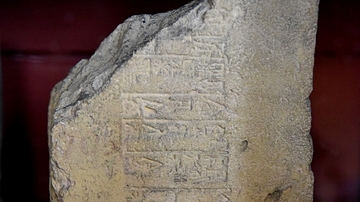
Mud Brick Stamped with the Name of King Amar-Sin
This baked-mud brick was stamped with the name of the Neo-Sumerian king Amar-Sin (also spelled Amar-Suen; his name was previously misread as Bur-Sin). The cuneiform inscription mentions the king's making of a great vessel or laver, which...
Image
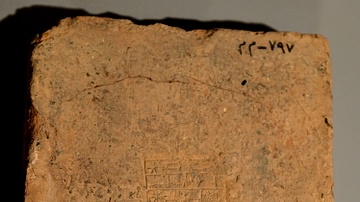
Mud-brick of Amar-sin
The cuneiform inscriptions stamped on this mud-brick mention the name of Amar-sin, king of Ur. Amar-sin was the 3rd king of Ur III Dynasty, and son of Shulgi. From Mesopotamia, modern-day Iraq. Neo-Sumerian period, Ur III, end of the 3rd...
Image
Fired clay Cylinder Mentioning Amar-Sin
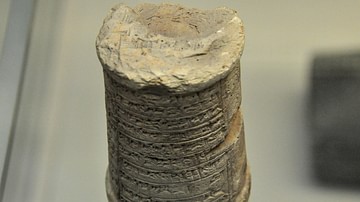
Scholarly copy of writings on a brick of Amar-Sin (Amar-Suen), a neo-Sumerian king who reigned between 2040-2036 BCE. The copy was written in the time of Sin-balassu-iqbi, governor of Ur during the reign of Ashurbanipal II, 675-655 BCE. From...
Image
Mud Brick Stamped with the Name of Warad-Sin
This baked-mud brick was stamped with the name of king Warad-Sin, king of Larsa; reigned 1770-1758 BCE (short chronology) and possible co-regency with his father Kudur-Mabuk. The cuneiform inscriptions mention the building of the temple of...
