
Search
Did you mean: Satyr?
Search Results

Article
Enuma Elish - The Babylonian Epic of Creation - Full Text
The Enuma Elish (also known as The Seven Tablets of Creation) is the Babylonian creation myth whose title is derived from the opening lines of the piece, "When on High". The myth tells the story of the great god Marduk's victory over the...

Article
Sioux Life Lessons: Iktomi and the Muskrat & Iktomi's Blanket
The Sioux stories known as Iktomi tales concern the trickster figure Iktomi (also known as Unktomi) who appears, variously, as a hero, sage, villain, clown, inept buffoon – or in other roles – but always serves to illustrate some important...
Article
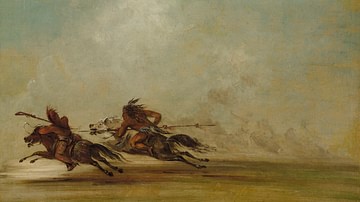
The Brave Who Went on the Warpath Alone and Won the Name of the Lone Warrior
The Brave Who Went on the Warpath Alone and Won the Name of the Lone Warrior is a Sioux tale in the tradition of the hero's journey in which a young person overcomes seemingly impossible challenges and is recognized as a great champion and...
Article
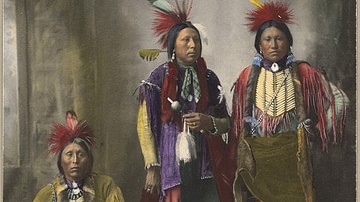
Saynday Tales
Saynday tales are popular legends of the Kiowa nation featuring the trickster figure Saynday who, like other Native American tricksters, sometimes appears as a hero, sometimes as a villain, and other times as a clownish buffoon. Two of the...

Article
Chaucer's The Book of the Duchess Full Text & Summary
The Book of the Duchess is the first major work of the English poet Geoffrey Chaucer (l. c. 1343-1400 CE), best known for his masterpiece The Canterbury Tales, composed in the last twelve years of his life and left unfinished at his death...

Article
The Layout of a Medieval Abbey
Abbeys were a striking feature of medieval urban and rural landscapes. Their layout and architecture reflected their purpose as cut-off monastic retreats which, conversely, also served and inspired their local communities. Although evolving...

Article
The Boy Who Was Sacrificed
The Boy Who Was Sacrificed is a legend of the Pawnee nation highlighting the belief that everything happens for a reason according to the will of Ti-ra'wa ("Father Above"), the supreme creator, and how even the smallest creatures have an...

Article
Herod the Great's Building Program
Herod the Great was the king of Judea from 37-4 BCE. As a client king of Rome, Herod's moniker as "Great" was due more to his grand building program throughout the eastern Mediterranean world. Herod's building program generally ran from 35...

Article
Coyote Tales of the Shasta Nation
The Coyote tales come from the Shasta people who originally inhabited the regions of modern-day northern California and southern Oregon. Coyote is a popular trickster figure among many Native peoples of North America, including the Shasta...

Article
Yellow Hair: George Armstrong Custer
Yellow Hair: George Armstrong Custer is the Cheyenne and Arapaho account of Lt. Colonel George Armstrong Custer (l. 1839-1876), his interaction with the Southern Cheyenne Chief Black Kettle (l. c. 1803-1868), the Washita Massacre (27 November...
