
Search
Did you mean: Commius?
Remove Ads
Advertisement
Search Results
Definition
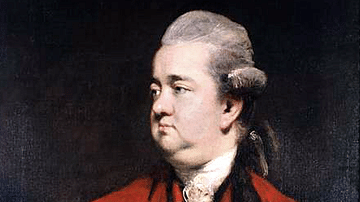
Edward Gibbon
Edward Gibbon (1737-1794) was an English historian most famous for his influential work The History of the Decline and Fall of the Roman Empire, volume one of which was published in 1776, with the final sixth volume coming in 1788. Gibbon's...

Definition
Brennus
Brennus (c. 390 BCE) was the Gallic war chief of the Senones who sacked and occupied Rome in 390 BCE. Nothing is known of him outside of the accounts given of this event which immortalized him as coining the phrase, “Woe to the Vanquished”...

Definition
Childeric I
Childeric I (r. c. 458-481) was a late antiquity king of the Salian Franks during the period of the fall of the Western Roman Empire. Childeric's reign solidified the Salians as a dominant Frankish tribe and helped pave the way for the unification...
Definition
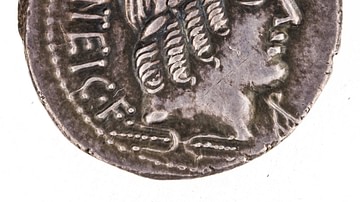
Vejovis
Vejovis (sometimes spelt Vediovis) was an obscure Roman deity. He is poorly attested in both written sources and archaeology, and his nature is debated by scholars. His name is related to Jove (Jupiter), and some authors described him as...

Article
The Role of Women in the Roman World
The exact role and status of women in the Roman world, and indeed in most ancient societies, has often been obscured by the biases of both ancient male writers and 19-20th century CE male scholars, a situation only relatively recently redressed...

Article
The Principate of Augustus
Augustus (r. 27 BCE to 14 CE), as the adopted son and heir of Julius Caesar (100-44 BCE), brought an end to the Roman Republic, and on 16 January 27 BCE, by Senatorial decree, he became the first Roman emperor. However, he would not be addressed...

Article
Sulla's Reforms as Dictator
Lucius Cornelius Sulla (l. 138 - 78 BCE) enacted his constitutional reforms (81 BCE) as dictator to strengthen the Roman Senate's power. Sulla was born in a very turbulent era of Rome's history, which has often been described as the beginning...

Article
Sulla's March on Rome
In 88 BCE, Lucius Cornelius Sulla (138-78 BCE) marched on Rome and entered the city's sacred inner boundary, the pomerium, bearing arms. Breaking this taboo, he sought to gain political power and control of the army of the East that had been...

Article
Continuity and Change after the Fall of the Roman Empire
The cataclysmic end of the Roman Empire in the West has tended to mask the underlying features of continuity. The map of Europe in the year 500 would have been unrecognizable to anyone living a hundred years earlier. Gone was the solid boundary...

Article
Rome under the Julio-Claudian Dynasty
The Julio-Claudians were the first dynasty to rule the Roman Empire. After the death of the dictator-for-life Julius Caesar in 44 BCE, his adopted son Octavian - later to become known as Augustus (r. 27 BCE - 14 CE) - fought a civil war against...
