
Search
Remove Ads
Advertisement
Search Results

Video
Pont du Gard (Roman Aqueduct) (UNESCO/NHK)
The Pont du Gard was built shortly before the Christian era to allow the aqueduct of Nîmes, France (which is almost 50 km long) to cross the Gard river. The Roman architects and hydraulic engineers who designed...

Definition
Roman Architecture
Roman architecture continued the legacy left by Greek architects and the established architectural orders, especially the Corinthian. The Romans were also innovators and they combined new construction techniques and materials...

Article
The Infrastructure of Caesarea Maritima
Caesarea Maritima, an ancient metropolis in modern-day Israel, was a remarkable engineering accomplishment. Extending Rome's military and commercial presence in the eastern Mediterranean in the latter years...

Article
Caesarea Maritima's Role in the Roman Empire
Caesarea Maritima, the city Herod the Great (r. 37-4 BCE) built for Rome on the southeastern coast of the Mediterranean served as the Roman Empire's powerbase of operations both commercially and militarily...
Image
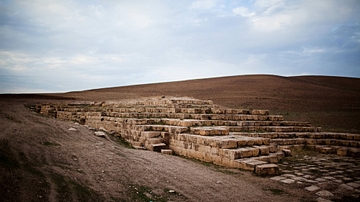
Jerwan Aqueduct
These are the remains of the oldest known aqueduct in the world. The Jerwan Aqueduct was constructed by king Sennacherib I of Assyria between 703 and 690 BCE. It represents a great feat of Assyrian engineering. The aqueduct...

Article
Top 10 Archaeological Sites in Provence
Provence has inherited a rich legacy from antiquity, boasting some of the best-preserved Roman ruins in Europe. In the 2nd century BCE, the Romans began their conquest of the region and called it “Provincia...

Definition
Roman Science
The Romans assimilated earlier Greek science for their own purposes, evaluating and then accepting or rejecting that which was most useful, much as they did in other fields such as warfare, art, and theatre. This assimilation of...

Article
A Roman Trail in the Moselle Valley
The Moselle Valley is Germany's oldest winegrowing region. The Romans brought viticulture to this area and planted vines along the Moselle River 2000 years ago. After settling the region c. 50 BCE and establishing...

Article
Top 5 Roman Sites in Southern Spain
Almost 700 years of continuous Roman occupation have left impressive traces in the Spanish landscape. Spain was then known as 'Hispania' and is now a fascinating location for the archaeological traveller. The...
Image
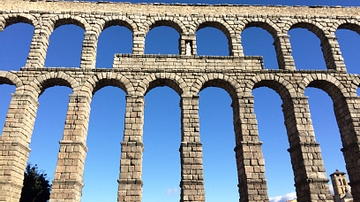
Segovia Aqueduct
The Aqueduct of Segovia is a Roman aqueduct in Segovia, Spain that was used for over a thousand years. It is one of the best preserved Roman aqueducts in existence. Its total lenght is 813 m and its height is 28 m.
