
Search
Remove Ads
Advertisement
Search Results

Article
Weapons of the Conquistadors
The Iberian conquistadors ("conquerors") were the first military men to explore, attack, and conquer territories in the Americas and Asia that would then become a part of the Spanish or Portuguese Empire. Indigenous peoples could not match...

Article
The Gold of the Conquistadors
The staggering quantity of gold the conquistadors extracted from the Americas allowed Spain to become the richest country in the world. The thirst for gold to pay for armies and gain personal enrichment resulted in waves of expeditions of...

Article
Cortés & the Fall of the Aztec Empire
The Aztec empire flourished between c. 1345 and 1521 CE and dominated ancient Mesoamerica. This young and warlike nation was highly successful in spreading its reach and gaining fabulous wealth, but then all too quickly came the strange visitors...

Article
The Fall of Tenochtitlan
The fall of Tenochtitlan on 13 August 1521 was a decisive moment in the dramatic collapse of the Aztec empire which had dominated Mesoamerica. Led by Hernán Cortés (1485-1547), the Spanish conquistadors enjoyed superior weapons and tactics...

Article
The Portuguese Colonization of the Azores
The Azores (Açores) are a North Atlantic island group, which was uninhabited before being colonized by the Portuguese from 1439. The Azores were strategically important for Portuguese mariners to use as a stepping stone to progress down the...

Article
The Changing Interpretation of the Spanish Conquest in the Americas
The fall in 1519 of Tenochtitlan, the capital of the Mexica or Aztec Empire, as it was later called, laid the foundation for the Spanish colonial empire on the North American mainland. It was the first time that Europeans had subjugated a...

Article
Treasure Ports of the Spanish Main
The treasure ports of the Spanish Main such as Cartagena, Portobelo, Panama, and Veracruz were used to collect the riches the Spanish Empire had extracted from the Americas, ready for transport in the two annual treasure fleets back to Europe...

Image
Ruins of The Church of Santa Maria do Carmo
Ruins of The Church of Santa Maria do Carmo. The church was established in 1389 CE by D. Nuno Álvares Pereira (1360-1431 CE) and destroyed in the 1755 CE Lisbon earthquake.
Image
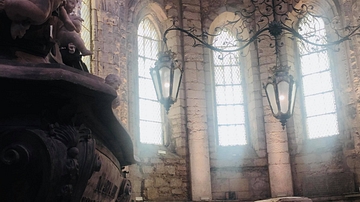
The Carmo Archaeological Museum
The Carmo Archaeological Museum, located within the ruins of The Church of Santa Maria do Carmo founded in 1389 CE by D. Nuno Álvares Pereira (1360-1431 CE). In the center is the tomb of King D. Fernando I (r. 1367-1383 CE).
Image
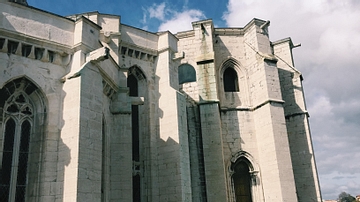
The Church of Santa Maria do Carmo
Church of Santa Maria do Carmo, famous for its beautiful Gothic architecture, established in 1389 CE by D. Nuno Álvares Pereira (1360-1431 CE). Now housing The Carmo Archaeological Museum.
