
Search

 This answer was generated by
 Search Results

Definition
Marcus Agrippa
Marcus Vipsanius Agrippa (l. 64/62 – 12 BCE) was Augustus' (r. 27 BCE - 14 CE) most trusted and unshakably loyal general and his right-hand man in the administration of the city of Rome. Although his name is forever connected with the first...
Image
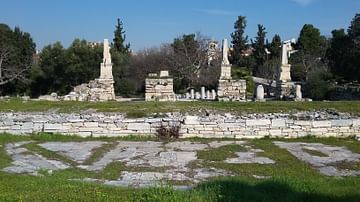
Odeon of Agrippa, Athens
Rear (stage) view of the Odeon of Agrippa at the Roman Agora of Athens. It was built in 15 BCE by Marcus Vipsanius Agrippa (l. c. 64-12 BCE), Roman statesman, general, and son-in-law of Augustus Caesar. It was a two-story auditorium that...

Definition
Battle of Actium
The Battle of Actium (2 September 31 BCE, fought in the Ionian Sea off Actium, Greece) was the decisive engagement of the civil war fought between Octavian Caesar (l. 63-14 CE, later known as Augustus, r. 27 BCE - 14 CE) and the forces of...

Definition
Roman Naval Warfare
Military supremacy of the seas could be a crucial factor in the success of any land campaign, and the Romans well knew that a powerful naval fleet could supply troops and equipment to where they were most needed in as short a time as possible...
Image
Marcus Agrippa
A cast of an original 1st century BCE marble bust of Roman general Marcus Agrippa (63-12 BCE). (Archaeological Museum of Pavia, Italy)
Image
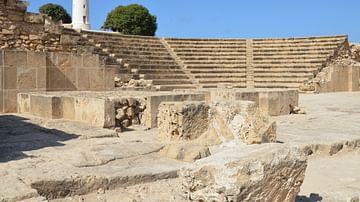
The Odeon of Nea Paphos, Cyprus
The Odeon located in the northeastern part of the ancient city of Nea Paphos (modern-day Paphos in Cyprus), was built in the 2nd century CE and could held approximately 1,200 spectators.
Article
The Battle of Actium: Birth of an Empire
The battle of Cynoscephalae in 197 BCE concluded the Second Macedonian War (200-197 BCE) and consolidated Rome's power in the Mediterranean, finally resulting in Greece becoming a province of Rome in 146 BCE. This engagement is sometimes...
Image
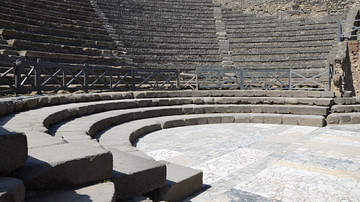
The Odeon of Pompeii
The Odeon in Pompeii was a small roofed theatre used for musical and singing performances as well as for miming, the most popular theatrical genre at the time. The building was built around 80-75 BCE and had a seating capacity of about 1,500...
Image
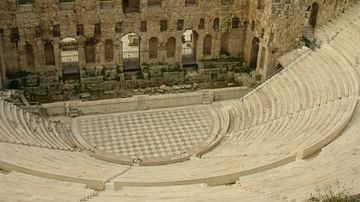
Odeon Of Herodes Atticus, Athens
The theatre of Herodes Atticus, Athens acropolis. 2nd Century CE.

Definition
Pantheon - Rome's Best-Surviving Building
The Pantheon (Latin: pantheum) is the best-preserved building from ancient Rome and was completed in c. 125 CE. Its magnificent concrete dome is a lasting testimony to the genius of Roman architects. As the building stands virtually intact...
