
Search
Did you mean: Anu?
Remove Ads
Advertisement
Search Results
Definition
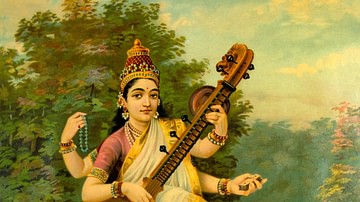
Saraswati
Saraswati (also Sarasvati) is the Hindu goddess of learning, wisdom, music, and aesthetics. She is also known as Bharati (eloquence), Shatarupa (existence), Vedamata ('mother of the Vedas'), Brahmi, Sarada, Vagisvari, and Putkari. As Vac...
Definition
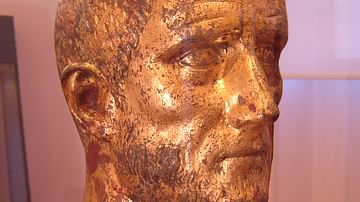
Aurelian
Aurelian was Roman emperor from 270 to 275 CE. He was one of the so-called Barracks Emperors, chosen by the Roman army during the turbulent period known as the Crisis of the Third Century (235-284 CE). Besides victories against various invading...

Definition
Surya
Surya (also known as Aditya) is the Hindu god of the Sun. He is considered the creator of the universe and the source of all life. He is the supreme soul who brings light and warmth to the world. Each day he travels across the sky in his...

Definition
Yama
Yama is the Hindu god of death, king of ancestors, and final judge on the destination of souls. He is also known as the 'Restrainer', Pretaraja or 'King of Ghosts', Dharmaraja or 'King of Justice', and as Daksinasapati is considered the regent...

Definition
Lumbini
Lumbini is a village, archaeological site, and place of pilgrimage honored as the birthplace of Siddhartha Gautama (the Buddha, l. c. 563-483 BCE) located in modern-day Rupandehi District of Nepal, Province 5, near the Indian border. It was...

Article
Views of the Afterlife in Roman Tombstone Inscriptions
Ancient views of the afterlife are reflected in literature, tomb inscriptions, and grave goods. Then, as now, a belief in another stage of existence after death was a shared belief by all ancient societies. Initially, the Greco-Roman Hades...

Article
Zenobia's Rebellion in the Historia Augusta
The Historia Augusta (Great History) is a Latin work of the 4th century CE that chronicles the lives of Roman emperors from 117-285 CE. Among the many stories related is the history of Zenobia of Palmyra and her challenge to Roman authority...

Article
Depictions of India in Ancient Literature
Herodotus (484 BCE – c. 425 BCE) has been called the Father of History since he was the first historian known to collect his materials in detail, test their accuracy to a certain extent and arrange them in a well-constructed and vivid narrative...

Video
Matariki and the Six Sisters
Hear the Matariki story of Ngāti Toa Rangatira iwi (tribe), Te Papa’s iwi in residence, retold for children by kaumātua (elder) Te Waari Carkeek. Beautiful time-lapse photography reveals places in the Wellington region that are significant...
