
Search
Remove Ads
Advertisement
Search Results

Definition
Viriathus
Viriathus (c. 180-140 BCE) was the leader of the Lusitani in their war with Rome. In 150 Viriathus escaped the Roman massacre and enslavement of Lusitani who had surrendered peacefully. Viriathus continued to fight in the resistance and rose...

Article
US Involvement in WWI - From Isolationism to Military Intervention
The United States remained neutral in the first three years of the First World War (1914-18) but did finally join the conflict at the end of 1917 following the threat of unrestricted submarine warfare on US merchant shipping and a secret...

Definition
U-Boat - Germany's Submarines of WWI & WWII
The U-boat, short for Unterseeboot (undersea boat), was the name for submarines used by the German Navy during the First World War (1914-18) and Second World War (1939-45). In the two Battles of the Atlantic, U-boats sank thousands of ships...

Definition
Otho
Otho was Roman emperor from January to April 69 CE. Immediately after the assassination of Galba, Otho, the governor of Lusitania, was proclaimed emperor by the army. However, the unrest that existed in the short reign of Galba would spell...

Article
Education in Roman Spain
There was no compulsory state education for children in any of the western provinces of the Roman Empire. The primary sources are sparse when it comes to the education in Roman Spain, and while some scholars argue for a network of schools...
Definition
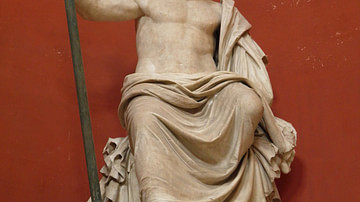
Galba
Galba was Roman emperor from June 68 to January 69 CE. With the death of Emperor Nero on June 9, 68 CE, the Julio-Claudian dynasty officially ended, leaving the Roman Empire without a clear successor to the throne. With the assistance of...

Article
Legions of Spain, Roman Africa & Egypt
The legions of Spain, Roman Africa, and Egypt did not see the intensity of action that prevailed elsewhere in Europe. However, the presence of these four legions - VII Gemina, IX Hispana, XXII Deiotariana, and II Traiana Fortis - was still...

Image
Roman Temple of Diana in Mérida
Temple of Diana, photograph by Juan Ángel Piqueras, Mérida, Badajoz, Extremadura, Spain, 01 August 2025. The so-called Temple of Diana is a Roman temple built between the end of the 1st century BCE and the beginning of the 1st century CE...
Image
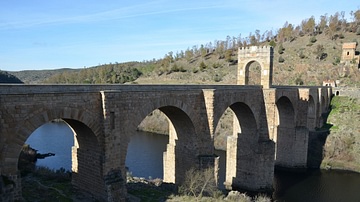
Alcántara Bridge
The Roman bridge at Alcántara in Extremadura, Spain, is one of the finest examples of Roman bridge-building and a monumental feat of engineering. It was built over the Tagus River in the ancient Roman province of Lusitania between 104 and...

Video
Archaeological Ensemble of Mérida (UNESCO/NHK)
The colony of Augusta Emerita, which became present-day Mérida in Estremadura, was founded in 25 B.C. at the end of the Spanish Campaign and was the capital of Lusitania. The well-preserved remains of the old city include, in particular...
