
Search
Remove Ads
Advertisement
Search Results

Image
Standard-bearer of Legio XIV Gemina
Tombstone of Gnaeus Musius, standard-bearer of Legio XIV Gemina, 1st century CE.
Landesmuseum, Mainz.
Image
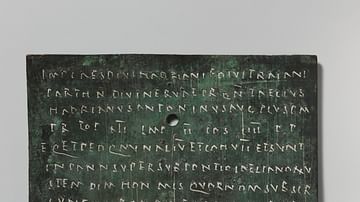
Roman Military Diploma
Bronze military diploma of an infantryman named Dasmenus Azalus, who served in the auxiliary units of the Roman army. Issued c. 149 CE.
Metropolitan Museum of Art, New York.

Quiz
Roman Warfare & Battles
Roman warfare Auxilary Centurion Clementia Concave Concilium Convex Corvus Dictator Disciplina Militaris Gladius Hastati Imperialism Legioniaries Legion Maniples Mercenary Principes Pyrrhic Victory Sacramentum Scutum Siege...
Image
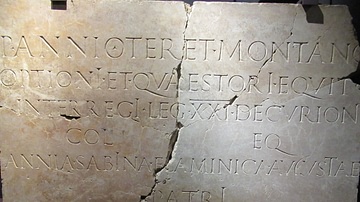
Funerary Inscription of a Roman Soldier
Funerary inscription of a Roman soldier who served in the Legio XXI Rapax.
Roman Museum, Nyon, Switzerland.

Video
Roman Army Structure
Infographic illustrating the structure of the Roman Army. Originally created as a video installation for the Vindolanda Museum at Hadrian's Wall on the English / Scottish border. Exhibition design by Studio MB, all design...

Video
A Day in the Life of a Roman Soldier - Robert Garland
View full lesson: https://ed.ted.com/lessons/a-day-in-the-life-of-a-roman-soldier-robert-garland The year is 15 CE, and the Roman Empire is prospering. Most of the credit will go to the emperor...

Image
The Roman-Parthian Conflict (53 BCE - 217 CE)
The Roman–Parthian conflict (53 BCE–217 CE) was a centuries-long struggle for dominance in Western Asia between the Roman Republic, later Empire, and the Arsacid dynasty of Parthia. It began with Rome’s...
Image
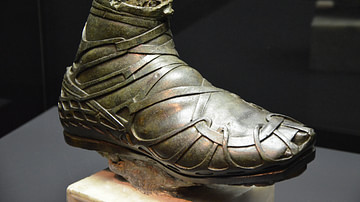
Bronze caliga from an over life-size statue of a Roman cavalryman
This bronze caliga was part of an over life-size statue of a Roman cavalryman from the 1st or the 2nd century CE. Caligae were heavy hob-nailed military boots worn by Roman legionary soldiers...
Image
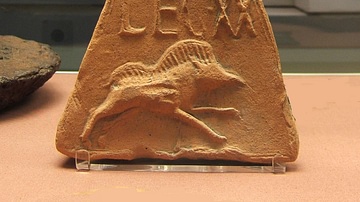
Symbol of Legion XX
Tile antefix with the name of Legion XX and a boar, the legionary symbol, from Holt, Clwyd, Wales. 2nd-3rd century CE.
The British Museum, London

Image
Amphitheatre, Burnum
The Roman amphitheatre at Burnum legionary camp dating from the 1st century CE (during the time of emperor Vespasian). It is the only military amphitheatre in the Roman province of Dalmatia (Croatia).
