
Search
Remove Ads
Advertisement

 This answer was generated by
 Search Results
Image
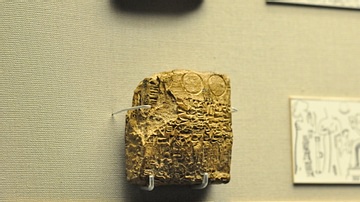
Unopened Clay Tablet Envelope from Kultepe
The cuneiform text on the center of this unopened envelop narrates a loan of silver to a husband and wife. The envelop is marked by rings and cylinder seals used by the diverse community at the city of Kultepe...
Image
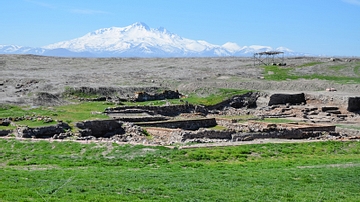
Kültepe Ruins
Kültepe, formerly known as Kanesh and Karum, was part of the network of trading settlements established in central Anatolia by Assyrian merchants from Ashur (northern Mesopotamia) in the early 2nd millennium BCE. This period was...

Article
Five Key Historical Sites of the Hittites
Although mentioned several times in the Biblical texts, the actual existence of the Hittites was largely forgotten until the late 19th century CE. With the discovery of Hattusa in 1834 CE, the city that was...

Definition
Assyria
Assyria was the region located in the ancient Near East which, under the Neo-Assyrian Empire, reached from Mesopotamia (modern-day Iraq) through Asia Minor (modern Turkey) and down through Egypt. The empire began modestly at the city...
Image
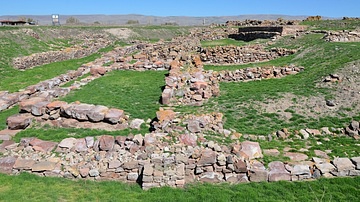
Ruins of Kanesh
The ruins of Warsama’s palace, King of Kanesh, at Kültepe in central Turkey, the capital of the ancient Kingdom of Kanesh and centre of a complex network of Assyrian trade colonies in the 2nd millennium BCE. The palace is one...
Image
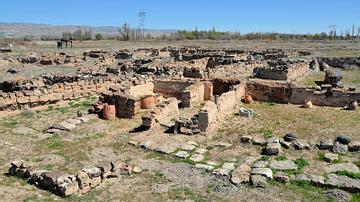
Karum Ruins
The ruins of Karum (known today at Kültepe in central Turkey), the capital trading centre of the Assyrian merchants in Anatolia in the first quarter of the 2nd millennium BCE. This period was called the “Assyrian Trading Colonies...
Image
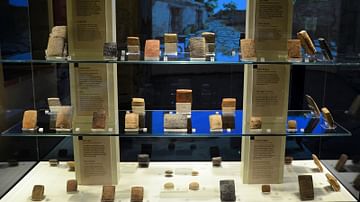
Cuneiform Clay Tablets from Kanesh
Clay tablets with cuneiform letters found at Kültepe in central Turkey (ancient Kanesh), 1900 BCE – 1700 BCE. They were all written by merchants who, from around 1900 BCE, had come to Kanesh from the city of Ashur...
