
Search
Remove Ads
Advertisement
Search Results

Definition
Parthian Culture
Stretching between China and India in the east to the Mediterranean in the west, Parthia ruled over one of the widest expanses of empire in its time and Parthian culture flourished for 500 years (247 BCE to 224 CE). While known for their...
Definition
Kaupang
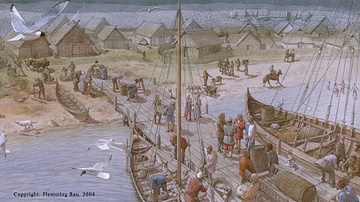
Kaupang was a Norwegian Viking Age town with a seasonal emporium established around c. 780 CE and abandoned around c. 950 CE. Kaupang is located on the western side of Oslofjord (Viksfjord) in what is the present-day southeastern county Vestfold...

Definition
Judean Pillar Figurines
Judean pillar figurines are an interesting and specific form of female representation from the Iron Age kingdom of Judah. They fall into a broader category of pillar figurines, which have a pole-like lower body and have been found throughout...

Definition
Poulnabrone
Poulnabrone is a portal tomb in the region known as the Burren, County Clare, Ireland and the oldest dated megalithic monument in the land. The name means "Hole of the Quern Stones", but the site is also commonly referred to as "Hole of the...
Definition
Hamaxia
Hamaxia (now known as Sinek Kalesi or Sinekkalesi, near the modern Alanya) was a city in western Cilicia in southern Turkey known for its lush landscape, cedar forests, and thriving timber export business. It was located on a high hill near...
Image
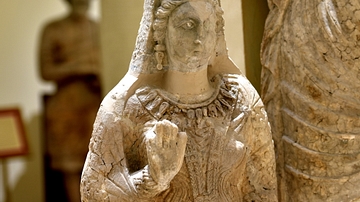
Statue of Princess Simi from Hatra
This is the upper part of the statue of Princess "Simi". Simi was the daughter of princess Doshafri, and granddaughter of king Sanatruq I (reigned c. 140 - 180 CE) through her mother. The overall depiction of the attire and pieces of jewelry...
Image
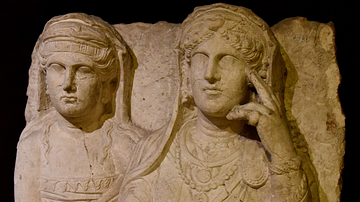
Funerary Relief from Palmyra of a Woman and Daughter
This relief depicts an older woman with her daughter. They are set in a line, represented frontally, stiff, and lifeless. Both of them wear turbans and headbands. At their temples, long strands of hair are combed back and tucked into the...

Image
Collection of Ptolemaic Jewellery
This opulent collection of Ptolemaic jewellery from Egypt probably belonged to a wealthy woman and was made between 225–175 BCE. The various pieces were made out of gold and are inlaid with a variety of precious stones. The collection...

Image
Visigothic Fibula
This fibula (pin used for fastening a piece of clothing) is one of a pair made by a Visigothic artist out of gold over bronze with gemstones, glass and meerschaum. 6th century CE. Walters Art Museum, Baltimore, MD

Image
Byzantine Jeweled Bracelet
Gold bracelet decorated with silver, pearls, amethyst, sapphire, glass, and quartz, 500-700. 3.8 x 8.2 cm.
Metropolitan Museum of Art, New York.
