
Search
Did you mean: Wall?
Remove Ads
Advertisement
Search Results

Definition
Bjorn Ironside
Bjorn Ironside (also spelt Björn Ironside; Old Norse Bjǫrn Járnsíða) is a legendary Viking who in the stories surrounding him raids alongside his brothers and his father, the Viking chieftain Ragnar Lothbrok. While the legends mentioning...

Definition
Ivar the Boneless
Ivar the Boneless (Old Norse Ívarr hinn Beinlausi) is known from Old Norse and medieval Latin sources as the son of the legendary Viking king Ragnar Lothbrok, in these stories raiding alongside his father and brothers and becoming the ruler...

Definition
Hundred Days
The Hundred Days refers to the second reign of French Emperor Napoleon I, who unexpectedly returned from exile to reclaim the French throne. It encompasses Napoleon's triumphant return to Paris on 20 March 1815, his climactic defeat at the...
Definition
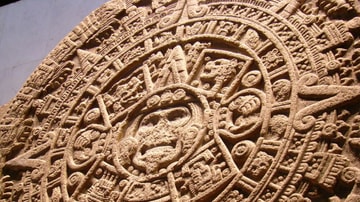
Tonatiuh
Tonatiuh, 'Turquoise Lord,' was the 5th and present sun in the Aztec view of the cosmos and the fierce sun god of several other Postclassic Mesoamerican cultures, including the Toltecs. It was thought that only the regular offering of hearts...
Definition
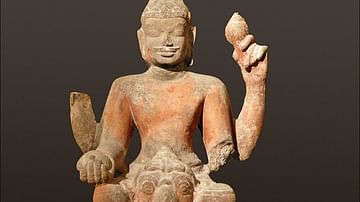
Garuda
Garuda is a bird creature from Hindu mythology that has a mix of eagle and human features. He is the vehicle (vahana) of Vishnu and appears on the god's banner. Garuda represents birth and heaven, and is the enemy of all snakes. In Indian...

Definition
Legio XXI Rapax
Legio XXI Rapax was a legion of the Roman army whose name name "Rapax" means "rapacious" or "greedy". It is not clear when the legion assumed this name; it may or may not be the same 21st legion Julius Caesar (100-44 BCE) formed before his...

Article
A Visual Who's Who of Greek Mythology
Achilles The hero of the Trojan War, leader of the Myrmidons, slayer of Hector and Greece's greatest warrior, who sadly came unstuck when Paris sent a flying arrow guided by Apollo, which caught him in his only weak spot, his heel. Adonis...

Article
Norse Alcohol & The Mead of Poetry
Alcohol played an integral part in Norse culture. People drank ale more than water because the brew had to be boiled as part of the process and so was safer to drink. The Norse of Scandinavia had four main types of fermented beverage: ale...
Article
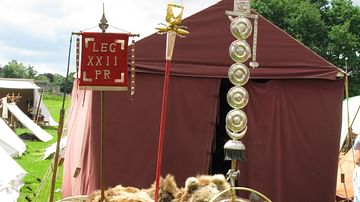
Legions of the Rhine Frontier
After Julius Caesar’s (100-44 BCE) conquest of Gaul, Roman legions pushed the borders of the Roman Empire’s frontier to the banks of the Rhine River. Augustus (r. 27 BCE - 14 CE) divided the newly acquired region into three provinces: Gallia...

Article
The Medicine Arrows and the Sacred Hat
The Medicine Arrows and the Sacred Hat is a short essay by anthropologist George Bird Grinnell (l. 1849-1938) explaining the origin and significance of the medicine arrows and buffalo hat, central to Cheyenne culture. The essay provides a...
