
Search
Remove Ads
Advertisement
Search Results

Article
Native American Enslavement in Colonial America
Slavery was practiced by the Native Americans before any Europeans arrived in the region. People of one tribe could be taken by another for a variety of reasons but, whatever the reason, it was understood...

Article
Tobacco & Colonial American Economy
The most important cash crop in Colonial America was tobacco, first cultivated by the English at their Jamestown Colony of Virginia in 1610 CE by the merchant John Rolfe (l. 1585-1622 CE). Tobacco grew in the wild...

Article
Roman Daily Life
From the early days of the Roman Republic through the volatile reigns of such ignoble emperors as Caligula, Nero, and Commodus, the Roman Empire continued to expand, stretching its borders to encompass the entire Mediterranean...

Article
Daily Life in Ancient Mesopotamia - Mirroring the Modern World
Daily life in ancient Mesopotamia cannot be described in the same way one would describe life in ancient Rome or Greece. Mesopotamia was never a single, unified civilization, not even under...
Article
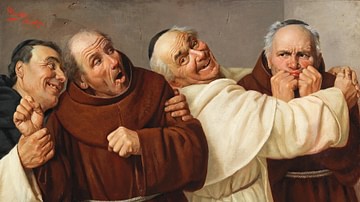
The Daily Life of Medieval Monks
Life for monks in a medieval monastery, just like in any profession or calling, had its pros and cons. While they were expected to live simply with few possessions, attend services at all hours of the day and night...

Article
Daily Life in Ancient China
Daily life in ancient China changed through the centuries but reflected the values of the presence of gods and one's ancestors in almost every time period. Villages like Banpo show evidence of a matriarchal society, where...

Article
Colonial Government in the Spanish Empire
The apparatus of colonial government in the Spanish Empire consisted of multiple levels, starting with the monarchy and Council of the Indies at the top and moving down to the viceroy, audiencias, mayors, and...
Article
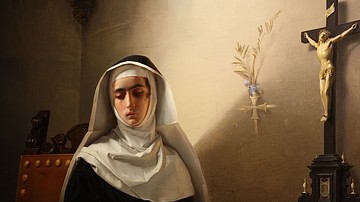
The Daily Life of Medieval Nuns
Monasteries were an ever-present feature of the Medieval landscape and perhaps more than half were devoted solely to women. The rules and lifestyle within a nunnery were very similar to those in a male monastery. Nuns...

Article
Colonial American Currency
Colonial American currency was a work in progress from the time of the earliest English settlements of the 1600s until the United States of America minted its own money in 1783. The monetary system was far from standardized...
Article
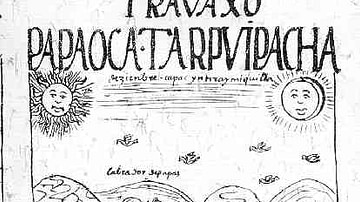
Daily Life in the Inca Empire
Daily life in the Inca empire was characterised by strong family relationships, agricultural labour, sometimes enforced state or military service for males, and occasional lighter moments of festivities to celebrate...
