
Search
Did you mean: Column?
Search Results

Definition
Phoenician Architecture
Phoenician architecture is typified by large temples with double-columned facades approached by a short staircase, enclosed sacred spaces containing cube-like and open-fronted shrines, and such large-scale engineering projects as dams and...

Definition
Donato Bramante
Donato Bramante (c. 1444-1514 CE) was an Italian Renaissance architect whose most famous project was the design for a new Saint Peter's Basilica in Rome, even if this work remained unfinished at his death. Bramante had also designed the influential...
Definition
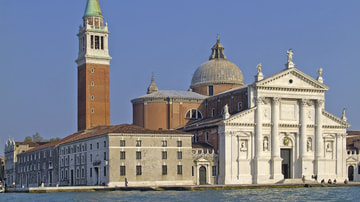
Andrea Palladio
Andrea Palladio (1508-1580 CE) was an Italian Renaissance architect most famous for the villas he designed in and around Vicenza and two large churches in Venice. Palladio blended elements of classical architecture, particularly the orders...
Definition
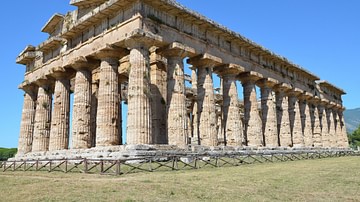
Paestum
Paestum, also known by its original Greek name as Poseidonia, was a Greek colony founded on the west coast of Italy, some 80 km south of modern-day Naples. Prospering as a trade centre it was conquered first by the Lucanians and then, with...

Definition
Nemea
Nemea was a religious sanctuary in the northern Peloponnese of Greece where pan-Hellenic athletic games were held every two years from 573 BCE until 271 BCE, after which, the Games were definitively moved to Argos. Early Settlement Situated...

Definition
Sounion
Sounion (or Sunium) was an important ancient Greek religious sanctuary sacred to the gods Poseidon and Athena. Spectacularly located on a promontory in southern Attica, the site is dominated by the temple of Poseidon perched on the cliff...

Article
Battle of Rivoli
The Battle of Rivoli (14-15 January 1797) was the climactic battle of Napoleon's Italian Campaign of 1796-97. A fourth and final attempt by the Austrian army to relieve the siege of Mantua was thwarted by Napoleon Bonaparte's Army of Italy...
Article
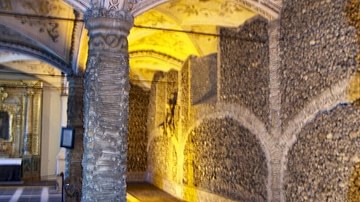
Skulls, Temples & Churches: A Visit to the Walled City of Evora
The sunbaked plain of the Alentejo region in central Portugal is called planicie dourada (golden plain) by the Portuguese, and it is dotted with cork oak forests, vineyards, olive groves, and hilltop towns with whitewashed houses. 'Alentejo'...

Article
Alexander the Great & the Burning of Persepolis
In the year 330 BCE Alexander the Great (l. 356-323 BCE) conquered the Achaemenid Persian Empire following his victory over the Persian Emperor Darius III (r. 336-330 BCE) at the Battle of Gaugamela in 331 BCE. After Darius III's defeat...

Article
Visitor’s Guide to the Monuments of Hadrian’s Villa
Hadrian’s Villa near Tivoli, Italy, is an opulent, sprawling garden-villa covering some 120 hectares (296 acres). It was built by Emperor Hadrian (76-138 CE) between 125-134 CE for use as his country estate, although the land may have originally...
