
Search
Search Results

Image
Codex Vaticanus
Codex Vaticanus, which may contain Constantine I’s original Bible.
Photo taken in Warsaw in 2015.

Definition
Florentine Codex - An Encyclopedia of Life in 16th-Century Mexico
The Florentine Codex is an encyclopedic accounting of life in 16th-century Mexico and an invaluable resource for understanding the exchange between European and Indigenous cultures during the Spanish conquest. Emerging from a time of societal...
Article
New Testament Text-Types
The books of the New Testament were written in the 1st century CE. As Christianity spread in the 2nd century CE, many copies were made, some by non-professionals. Early manuscripts are considered to be closer to the original than later manuscripts...

Definition
Edda
Edda is a term used to describe two Icelandic manuscripts that were copied down and compiled in the 13th century CE. Together they are the main sources of Norse mythology and skaldic poetry that relate the religion, cosmogony, and history...
Image
Florentine Codex
The General History of the Things of New Spain or Florentine Codex, an ethnographic codex by Bernardino de Sahagún, Book 7, Folio 9v, Mexico, 16th century. Written in the mid- to late 16th century, this collection of images and histories...

Image
Duke Heinrich von Breslau in the Codex Manesse
Page from the early 14th-century Codex Manesse - an illuminated book of poetry composed in Middle High German - depicting Duke Heinrich von Breslau (probably Henry IV of Silesia, also known as Henryk IV Probus in Polish) participating in...

Image
Codex Regius of the Poetic Edda
The Codex Regius of the Poetic Edda is the oldest and most comprehensive extant source of Norse mythology. 14th century CE. It is housed at the Arni Magnusson Institute of Learning in Reykjavik, Iceland.

Image
Henry I, Count of Anhalt in the Codex Manesse
Page from the early 14th-century Codex Manesse - an illuminated book of poetry composed in Middle High German - depicting Henry I, Count of Anhalt participating in a tournament.
Image
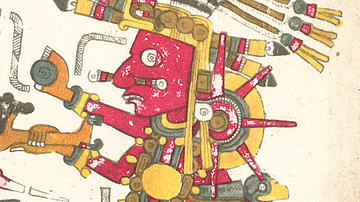
Tonatiuh, Codex Borgia
Tonatiuh, the Aztec god of the 5th and last sun. From the Codex Borgia. (Vatican Museum Rome)

Image
Xolotl, Codex Fejérváry-Mayer
Drawing of the Aztec god Xolotl, playing ball. From a facsimile of the pre-Hispanic Codex Fejérváry-Mayer.
The British Museum, London.
