
Search
Remove Ads
Advertisement
Search Results

Image
Quadriga Chariot at Full Speed
This Panathenaic prize amphora shows a quadriga chariot drawn by four horses at full speed, with the white stele (marker) representing the finish line. This vase belongs to a distinctive type given as a prize to the winner of the chariot...

Image
Chariot Race from Pompeii
Roman wall painting depicting a chariot race, from Pompeii, Casa delle Quadrighe (House of the Chariot Race), dated to 68-79 CE.
Naples Archaeological Museum.

Image
Chinese Qin Chariot
A Qin chariot from the 'terracotta army'. Tomb of Shi Huangdi, 259-210 BCE, Shaanxi Province, China.

Image
Egyptian War Chariot
An illustration of what an Egyptian war chariot may have looked like.

Image
Geometric Amphora with Chariot Scene
A geometric amphora with a battle scene including a chariot. 8th century BCE. (Archaeological Museum of Paros, Greece)

Image
Chariot, Terracotta Army
A chariot from the 'Terracotta Army'. Tomb of Shi Huangdi, 259-210 BCE, Shaanxi Province, China.

Image
Hittite War Chariot
Relief orthostat (stone slab at base of wall) of war chariot from Sam'al (Turkey), west side of citadel gate; Basalt; Late Hittite period (9th cent BCE); Museum of the Ancient Orient, Istanbul Archaeological Museums.

Definition
The Art of War
The Art of War (Sunzi bingfa) is a 5th-century BCE military treatise written by the Chinese strategist Sun-Tzu (aka Sunzi or Sun Wu). Covering all aspects of warfare, it seeks to advise commanders on how to prepare, mobilise, attack, defend...
Image
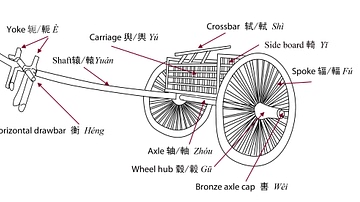
Chinese Chariot Design
An illustration of the typical chariot used in ancient China.

Image
Chariot Panel, Arch of Titus
A panel from the Triumphal Arch of Titus, erected in c. 81 CE by Domitian to commemorate his brother Titus' campaigns in the Jewish War (70-71 CE). The relief shows Titus riding a chariot and being crowned by Victory. Forum Romanum, Rome.
