
Search
Search Results
Definition
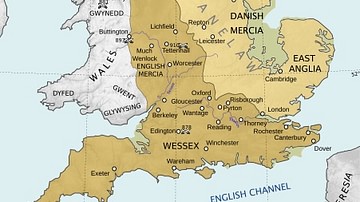
Kingdom of Wessex
The Kingdom of Wessex (c. 519-927 or c. 519-1066) was a political entity founded by the West Saxon Chieftain Cerdic (r. 519-540) in 519 in the Upper Thames Valley of modern-day Britain which would later evolve into the modern nation. The...

Definition
Anglo-Saxon Warfare
Anglo-Saxon warfare was characterised by frequent and violent conflicts between petty kings, which ultimately led to the rise of larger kingdoms such as the Kingdom of Mercia, the Kingdom of Northumbria, and the Kingdom of Wessex. In early...
Definition
Aethelred, Lord of the Mercians
Aethelred ruled as Lord of the Mercians from c. 881 to 911 and was a key military leader in the fight against Viking conquest and settlement in England. To defend Mercia, he allied himself to the powerful Kingdom of Wessex under the leadership...
Definition
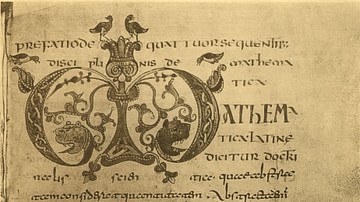
Etymologiae
The Etymologiae (Etymologies) is a Latin work by Isidore of Seville (l. c. 560 - 636 CE), compiled in the early 7th century CE and published in its final form shortly after his death. The book is a type of medieval encyclopedia and is a survey...

Article
Battle of Edington
The Battle of Edington, fought in May 878 in southwest England, saw Alfred the Great, King of Wessex (r. 871-899), win a decisive victory over the Viking leader Guthrum (d. 890). Two weeks later, under the terms of the Treaty of Wedmore...
Article
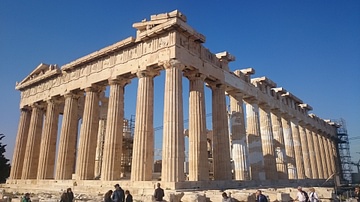
Greek World Heritage Sites
Greece, the 'cradle of western civilization', is home to a large number of spectacular sites from the ancient world, several of which have been placed on the UNESCO World Heritage List. These sites of great historical importance, interest...
Article
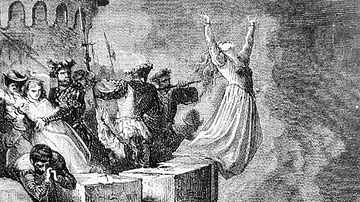
The Sixteenth-Century Massacre of the Waldensians of Mérindol
As the Reformation developed in France in the first half of the 16th century, there were several episodes of severe repression which preceded the Wars of Religion (1562-1598). These were times of great hardship and oppression against those...

Article
Cousteau's Calypso - The World's Most Famous Research Ship
Slicing through tropical reefs or patrolling Arctic waters, the Calypso gained worldwide fame as the research ship of the French underwater explorer Jacques-Yves Cousteau. Seen by millions on TV documentaries broadcast worldwide, the Calypso...

Article
Elephants in Hellenistic History & Art
Elephants were thought of as fierce and frightful monsters in antiquity, very real though rarely seen until the Hellenistic period. They were deployed on the battlefield to strike terror into the enemy, however, since fear was considered...

Video
Colosseum from the Top Wall - Ancient Rome Live (AIRC)
The Colosseum (the Flavian amphitheater) is the largest amphitheater the Romans ever constructed, with a circumference of 545 m, height of 50 m, 189m long and 156 wide. The exterior wall of travertine stone has been estimated to 100,000 tons...
