
Search
Did you mean: Samoset?
Remove Ads
Advertisement

 This answer was generated by
Search Results
Definition
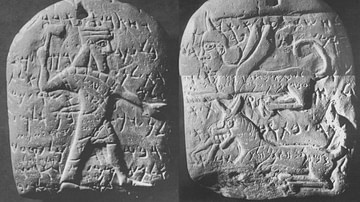
Arslan Tash Amulet
Dated to the 7th century BCE, the Arslan Tash amulet (AT1) was discovered in Arslan Tash, Syria and contains the writing of Phoenician, magic incantations. The limestone plaque includes a variety of features: incantations perceived...

Article
The Egyptian Amulet: Pious Symbols of Spiritual Life
Material Objects & Cultures Material objects convey volumes about the people who possessed them. Cultures and societies in every generation are in part classified - either correctly or incorrectly...

Image
Amulet of the God Shu
Faience amulet depicting the Egyptian god Shu. Late Period, 26th Dynasty, 664-525 BCE. (Art Institute of Chicago)

Image
Ninurta Amulet
The inscription on this blue stone amulet calls on the warrior god Ninurta for help against any evil. From Mesopotamia, Iraq. Circa 700-550 BCE. (The British Museum, London)

Image
Assyrian Amulet
This bronze plaque represents an amulet against bad spirits and diseases. From northern Mesopotamia (modern-day Iraq). Assyrian. Istanbul Archaeological Museums/Ancient Orient Museum, Istanbul, Turkey.
Image
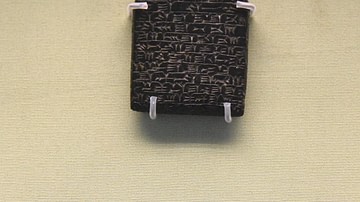
Mesopotamian Amulet Against Plague
Mesopotamian amulet covered with a quotation from a poem, the Akkadian Erra Epic, thought suitable to ward off plague. From Ashur, Northern Mesopotamia, Iraq. Neo-Assyrian Period, 800-612 BCE. The British Museum...
Image
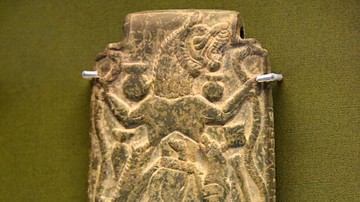
Demoness Lamashtu Amulet
Amulet depicting a Lamashtu standing on a donkey and suckling a jackal and a wild pig, from Northern Mesopotamia, modern-day Iraq, c. 800-550 BCE. Lamashtu prayed on women in childbirth and newborn infants. She has a...

Image
Pazuzu Amulet
A copper-alloy amulet of Pazuzu; the king of the demons of the wind. He has a human body, 4 wings, lion forepaws, vulture's feet, and rattle snake tail. Pazuzu is often depicted with his right hand pointing upward and left hand...
Image
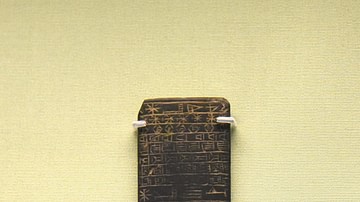
Mesopotamian Amulet Against Ghosts
Stone inscribed with an incantation that has 7 signs, repeated 7 times. It is much worn through use. From Mesopotamia, modern-day Iraq, c. 800-550 BCE.
The British Museum, London.
Image
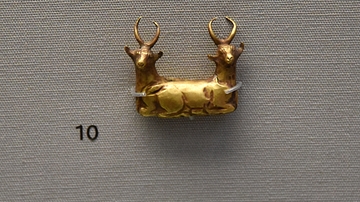
Mesopotamian Antelope Amulet
The antelopes of this amulet were joined at their hindquarters. This gold jewellery was found (together with fish amulets) on Puabi's arm inside her grave. Early Dynastic Period, circa 2600 BCE. From the Royal Cemetery...
