
Search
Did you mean: Tyre?
Remove Ads
Advertisement
Search Results
Definition
Runes
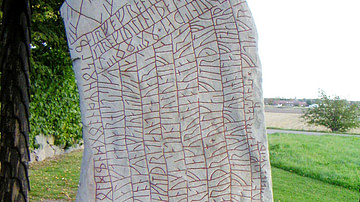
Runes are letters in the runic alphabets of Germanic-speaking peoples, written and read most prominently from at least c. 160 CE onwards in Scandinavia in the Elder Futhark script (until c. 700 CE) and the Younger Futhark - which illuminated...

Definition
Silenus
Silenus (also spelt Silenos) is a rustic god of the forest, drunkenness and wine-making in Greek mythology. He is best known as the companion and foster father of the god Dionysos. Silenus is closely associated with the satyrs, sometimes...

Definition
Hesperides
The Hesperides are nymph-goddesses of the evening and the west in Greek mythology. They were the daughters of Atlas, the Titan who bore the heavens on his shoulders, and Hesperis, the personification of the west, or Nyx, the personification...

Definition
Heimdall
Heimdall is a mysterious deity of Norse mythology whose main attribute refers to guarding the realm of the gods, Asgard, from his high fortress called Himinbjörg found at the top of Bifröst, the rainbow bridge. He has the might of sea...

Article
Nine Realms of Norse Cosmology
Norse cosmology divided the universe into nine realms. The center of the universe was the great world-tree Yggdrasil and the nine realms either spread out from the tree or existed in levels stretching from the roots...
Interview
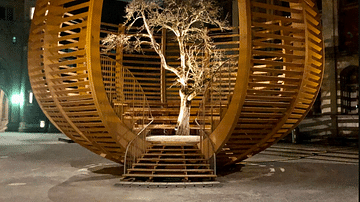
In the Forest - Exhibition Interview Schweizerisches Landesmuseum
The forest is a habitat for people, animals, and plants, a provider of invaluable resources, and an ally in the fight against climate change. The greatest beneficiary of the forest is humanity...

Article
The Mesopotamian Pantheon - The Ancient Gods and Goddesses of the Near East
The gods of the Mesopotamian region were not uniform in name, power, provenance or status in the hierarchy. Mesopotamian culture varied from region to region and, because of this...

Article
The Ancient Celtic Pantheon
The ancient Celtic pantheon consisted of over 400 gods and goddesses who represented everything from rivers to warfare. With perhaps the exception of Lugh, the Celtic gods were not universally worshipped across Iron Age...

Article
The Lamentations of Isis and Nephthys
The Lamentations of Isis and Nephthys is an ancient Egyptian text in which the two goddess-sisters call the soul of the god Osiris to rejoin the living. The poem takes the form of a call-and-response liturgy and...

Article
Christmas Through the Ages
The Christmas holiday has gathered around it customs and traditions for over two millennia, some of which even pre-date the Christian festival itself. From gift-giving to the sumptuous spread of a Christmas dinner table...
