
Search
Remove Ads
Advertisement
Search Results

Definition
Hafez Shiraz
Hafez of Shiraz (also given as Hafiz, l. 1315-1390) is considered the greatest of the Persian poets and among the most famous and admired writers in world literature. He is among the most often translated poets in the present day and his...

Definition
Moses
Moses (c. 1400 BCE) is considered one of the most important religious leaders in world history. He is claimed by the religions of Judaism, Christianity, Islam, and Bahai as an important prophet of God and the founder of monotheistic belief...

Definition
Medieval Literature
Medieval literature is defined broadly as any work written in Latin or the vernacular between c. 476-1500, including philosophy, religious treatises, legal texts, as well as works of the imagination. More narrowly, however, the term applies...
Definition
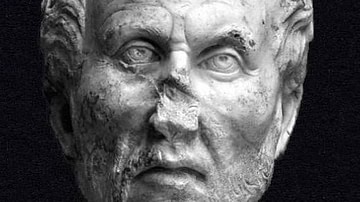
Plotinus
Plotinus (c. 204-270) was a Platonic philosopher born in Lycopolis, Egypt. Although the story of his life was written down by his student Porphyry, few biographical details are included because Plotinus rejected the physical world of appearances...

Definition
Plutus (Play)
Plutus (aka Wealth) is a play written by the great Greek comedy playwright Aristophanes in 388 BCE. It was the last of his plays to be performed during his lifetime. Like his earlier play Ecclesiazusae (The Assemblywomen), Wealth was written...

Definition
Council of Chalcedon
The Council of Chalcedon was called in 451 CE by the Roman Emperor Marcian (r. 450-457) to settle debates regarding the nature (hypostases, "reality") of Christ that had begun at two earlier meetings in Ephesus (431 CE and 439 CE). The question...

Definition
Ancient Greek Tragedy
Greek tragedy was a popular and influential form of drama performed in theatres across ancient Greece from the late 6th century BCE. The most famous playwrights of the genre were Aeschylus, Sophocles, and Euripides and many of their works...

Definition
Lysistrata
Lysistrata was the third and final of the peace plays written by the great Greek comic playwright Aristophanes (c. 445 - c. 386 BCE). Shown in 411 BCE at the Lenaea festival in Athens, it was written during the final years of the war between...
Definition
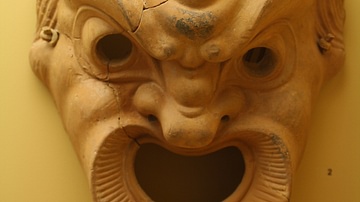
The Clouds
The Clouds is a comedy written c. 423 BCE by the Greek playwright Aristophanes (c. 448 BCE – c. 385 BCE). A failure at the Dionysia competition, finishing third out of three, it was revised later in 418 BCE but never produced in the author's...

Lesson Pack
Mesopotamia: Government & Religion
This lesson pack on government and religion in ancient Mesopotamia includes the following content: Three Lesson Plans - Rise of City States - Temples & Divine Kingship - Code of Hammurabi Additional Materials - Open Questions /...
