
Search
Remove Ads
Advertisement
Search Results
Definition
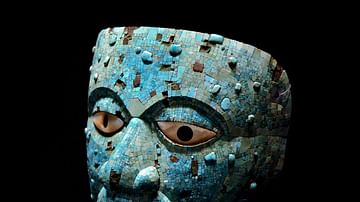
Xiuhtecuhtli - The Aztec God of Fire
Xiuhtecuhtli or 'Turquoise Lord' was the Aztec god of fire and also closely associated with young warriors and rulers. To the Maya he was known as Chac Xiutei. Xiuhtecuhtli was the patron of the day Atl (water) and the trecena period 1 Coatl...
Definition
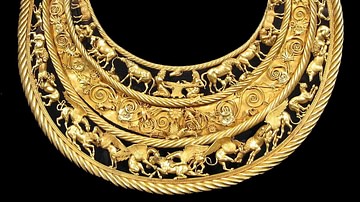
Scythian Art
Scythian art is best known for its 'animal art.' Flourishing between the 7th and 3rd centuries BCE on the steppe of Central Asia, with echoes of Celtic influence, the Scythians were known for their works in gold. Moreover, with the recent...

Definition
Cerveteri
Cerveteri (Etruscan name: Cisra or Caisra, Greek: Agylla, Roman: Caere) was an important Etruscan town which flourished between the 7th and 4th century BCE. Located near the western coast of central Italy, around 50 km north of Rome, Cerveteri...
Image
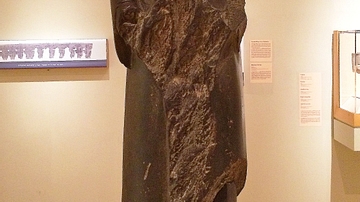
Statue of the Egypto-Persian Ptahhotep
This statue of Ptahhotep (who was the Overseer of the Treasury) is shown in a Persian costume that Egyptian officials adopted when Egypt was under Persian control. The jacket with flaring sleeves, over which a skirt is wrapped, is complemented...
Article
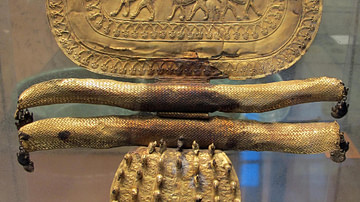
Regolini-Galassi Tomb
The Regolini-Galassi Tomb is located in the Etruscan town of Cerveteri (aka Cisra or Caere) near the western coast of central Italy, around 50 km north of Rome. Cerveteri flourished between the 7th and 4th century BCE and has hundreds of...

Interview
Tutankhamun and the Tomb that Changed the World with Dr. Bob Brier
Join World History Encyclopedia as they sit down with Dr. Bob Brier to chat all about his new book Tutankhamun and the Tomb That Changed the World, published by Oxford University Press. Kelly: Welcome. Thank you so much for joining me today...

Article
Parthian-Scythian Relations
While little is written about Parthian-Scythian relations, not only did the Parthians share origins with the Scythians and cooperated militarily but social, cultural, and commercial interactions were likely as well. Essentially leading a...

Image
The Gayer-Anderson Cat
Hollow cast bronze statue depicting a seated cat wearing golden earrings, a nose ring and a silver wedjat (Eye of Horus) pectoral. Possibly from Saqqara, Egypt, c. 600 BCE. Bequest of Major Robert Gayer-Anderson, 1939. The British Museum...
Image
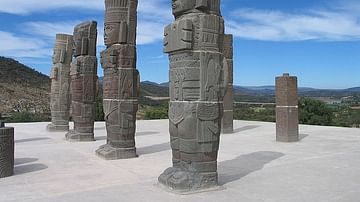
Toltec Warrior Columns
The columns atop Pyramid B at the Toltec capital of Tollan (Tula) which once supported a roof structure. They are each composed of four column drums and represent Toltec warriors ready for battle wearing their customary headdress and butterfly...

Image
Aztec Double-Headed Serpent (Detail)
A detail of the celebrated Aztec double-headed serpent. It is made from wood covered in turquoise mosaic, spondylus (red) and conch (white) shell. The eyes would have been rendered with inlay, probably of iron pyrite. The piece is believed...
