
Search
Search Results

Article
Exploring Western Crete's Archaeological Treasures
As the cradle of European civilization and a meeting place of diverse cultures, Crete is a magical island that stands apart in the heart of the Mediterranean sea. Its prominent place in world history dates back to the mysterious and fascinating...

Article
10 Virtual Tours of Archaeological Sites & Museums in Turkey
Thanks to the new Sanal Muze digital portal released by the Ministry of Culture and Tourism of Turkey in 2020 CE, history lovers and art enthusiasts can now take virtual tours of Turkey's best archaeological sites and museums. There are currently...

Article
Top 10 Archaeological Sites in Caria, Turkey
Located at the crossroads of many ancient civilizations, Turkey is a haven for archaeology lovers. Over the centuries, a succession of empires and kingdoms – Hittite, Lydian, Persian, Greek, Roman, Byzantine and, finally, Ottoman – ruled...
Image
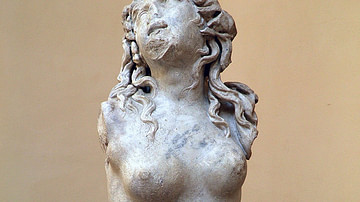
Scylla Marble Statue
Marble statue of Scylla, a monstrous sea goddess who haunted the rocks of a narrow strait opposite the whirlpool daemon Charybdis (Kharybdis). Ships that sailed too close to her rocks would lose six men to her ravenous, darting heads. The...

Image
Canopus, Hadrian's Villa
One of the most striking and best preserved parts of Hadrian's Villa at Tivoli (Italy) consists of a pool named Canopus and the so-called Serapeum, a monumental summer cenatio with a nymphaeum set at the southern end of the Canopus.
Image
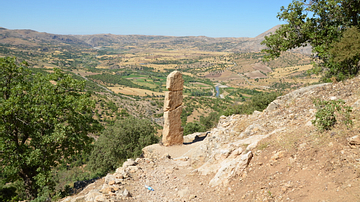
Arsameia on the Nymphaios
Arsameia on the Nymphaios (Arsameia ad Nymphaeum) is located at the foot of Mount Nemrut in Eastern Turkey. In the 1st century BCE, it was a royal seat and the summer capital of the Kingdom of Commagene, an ancient kingdom of the Hellenistic...
Image
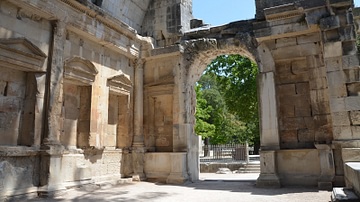
Temple of Diana, Nimes
The so-called Temple of Diana, part of an Augusteum, modern-day Nîmes, France. The temple was built in the 1st century CE around a Nymphaeum and dedicated to Augustus.

Video
Capitoline Trophies (Tropaea Marii) - Ancient Rome Live (AIRC)
These two marble sculptures represent a stone version of the “trophy” that was an ornamental display of the captured arms of the defeated foe. Although they became known as the “Trophies of Marius” in reference to now lost “trophies” erected...
