
Search
Did you mean: Tyre?
Remove Ads
Advertisement

 This answer was generated by
 Search Results
Image
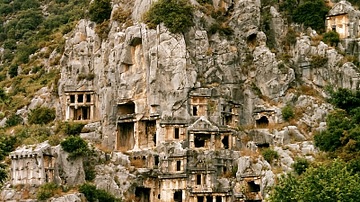
Myra - Ocean Necropolis
Myra is an ancient town in Lycia. The city has two necropoli of Lycian rock-cut tombs in the form of temple fronts carved into the vertical faces of cliffs at Myra: the river necropolis and the ocean necropolis. The...

Article
Paul's Journeys and the Mediterranean Trade
Mediterranean trade increased exponentially at the turn of the first millennium. During Rome's zenith, goods of all sorts began to move in all directions. As a common traveler aboard merchant ships, Paul...

Article
Caesarea Maritima's Role in the Mediterranean Trade
Caesarea Maritima was located on the eastern coast of the Mediterranean Sea. Built from the ground up in 22-10 BCE by Rome's client king, Herod the Great (r. 37-4 BCE), its location in relation to ship...

Article
The Journeys of Paul the Apostle
The journeys of Paul the Apostle, as the New Testament relates in the Book of Acts, started with his conversion experience on the way to Damascus, after which instead of seeking to thwart the growing Christian movement...

Article
Christmas Through the Ages
The Christmas holiday has gathered around it customs and traditions for over two millennia, some of which even pre-date the Christian festival itself. From gift-giving to the sumptuous spread of a Christmas dinner table...

Article
Pilgrimage in the Byzantine Empire
Pilgrimage in the Byzantine Empire involved the Christian faithful travelling often huge distances to visit such holy sites as Jerusalem or to see in person relics of holy figures and miraculous icons on show from...
Article
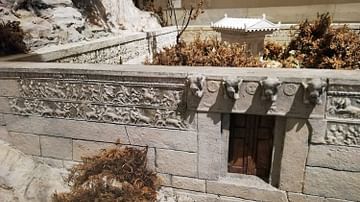
The Heroon of Trysa: A Lycian Tomb Reappears
The Heroon of Trysa was the tomb of a powerful Lycian dynast surrounded by a precinct wall covered with remarkable mythological friezes. It was discovered in 1841 CE when a Polish-Prussian school teacher...
