
Search
Remove Ads
Advertisement
Search Results
Image
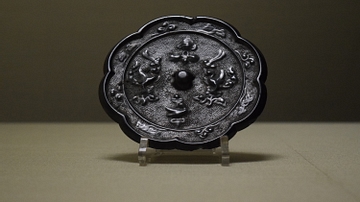
Nara Period Mirror
An eight-lobed cast bronze mirror with flowers and luan (a mythical bird) decoration. From Mount Tsuwado, Mukuno, Yamaga-machi, Kitsuki-shi, Oita, Japan. Nara Period, 8th century CE. Tokyo National Museum)
Image
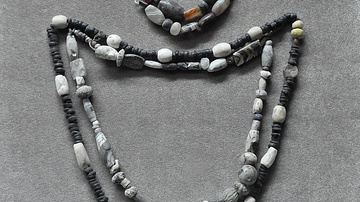
Necklaces from the Old Babylonian period
These 3 necklaces were founds inside graves. From Mesopotamia, modern-day Iraq. Old-Babylonian period, 2000-1500 BCE. The Sulaimaniya Museum, Iraq.
Image
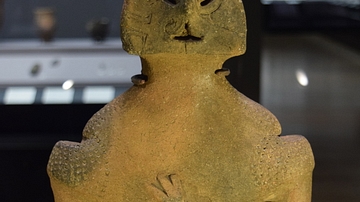
Dogu Figurine, Jomon Period
A clay dogu figurine. From Kamikurokoma, Fuefuki-shi, Yamanashi, Japan. Jomon Period, 3000-2000 BCE. (Tokyo National Museum)

Image
Necklace from the Old Babylonian Period
This necklace was found inside a grave that dates back to the old Babylonian period, 2000-1500 BCE, Mesopotamia, Iraq. (The Sulaimaniya Museum, Iraq).
Image
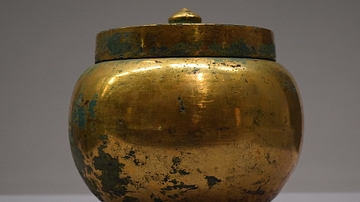
Cinerary Urn, Nara Period
A gilded cast bronze cinerary urn from the Nara Period (710-794 CE). From Kamori, Katsuragi-shi, Nara, Japan. Important Cultural Property (Tokyo National Museum)
Image
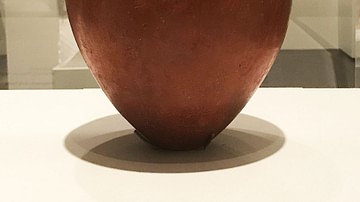
Predynastic Period Terracotta Vase from Egypt
This terracotta vase dates from the Predynastic period in ancient Egyptian history, c. 4500-3100 BCE. (Iris & B. Gerald Cantor Center for Visual Arts at Stanford University, Stanford, California)
Image
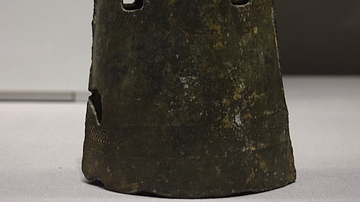
Dotaku Bell, Yayio Period
A bronze dotaku bell, Yayoi Period, 4th-2nd century BCE, Japan. (Tokyo National Museum)

Image
Yayoi Period Bracelet
A glass bead bracelet from the Yayoi Period in Japan, 5th century BCE to 3rd century CE. (Tokyo National Museum)

Definition
Ancient Scotland
Scotland is a country which, today, comprises the northern part of Great Britain and includes the islands known as the Hebrides and the Orkneys. The name derives from the Roman word "Scotti" which designated an Irish tribe who...

Image
Model of Edo Castle during the Tokugawa Period
Scale model of the Honmaru and Ninomaru Palaces of Edo Castle, as they would have appeared during the late Tokugawa Shogunate. (Edo-Tokyo Museum, Japan)
