
Search
Remove Ads
Advertisement
Search Results

Article
The Art of the Tang Dynasty
The art of the Tang Dynasty (618-907 CE) began to explore new possibilities in materials and styles with landscape painting and ceramics, in particular, coming to the fore. New techniques, a wider range of colours and...

Article
The Art of the Han Dynasty
The art of the Han dynasty (206 BCE - 220 CE) of ancient China is characterised by a new desire to represent everyday life and the stories from history and mythology familiar to all. The arts were fuelled both by a political...

Article
Rock Art History of Madhya Pradesh: Adamgarh & Nagori
Rock art, that is paintings and carvings on natural rock formations, is one of the earliest forms of creative expression and a universal phenomenon among prehistoric societies. An instrument of communication...

Definition
Thracian Art
The art produced by the people of Thrace, as indicated by the many precious objects found in Thracian tombs dating from the Bronze Age onwards, was, like the culture itself, a mix of indigenous ideas and foreign influences. Although...

Article
The Weapons of an English Medieval Knight
The weapons of an English medieval knight in combat included the long sword, wooden lance with an iron tip, metal-headed mace, battle-axe, and dagger. Trained since childhood and practised at tournaments, the...

Article
Medieval Cures for the Black Death
The Black Death is the 19th-century CE term for the plague epidemic that ravaged Europe between 1347-1352 CE, killing an estimated 30 million people there and many more worldwide as it reached pandemic proportions...

Article
Peasant Life in a Medieval Manor - The Family of Bodo, Carolingian Farmers
Bodo was a early 9th-century Frankish farmer. He and his family hailed from a manor owned by the monastery of St.-Germain-des-Prés near Paris and worked as its tenants. He ploughed...
Article
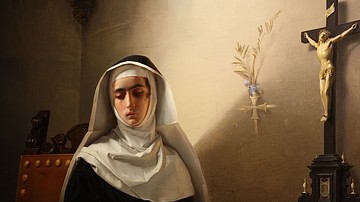
The Daily Life of Medieval Nuns
Monasteries were an ever-present feature of the Medieval landscape and perhaps more than half were devoted solely to women. The rules and lifestyle within a nunnery were very similar to those in a male monastery. Nuns...
Article
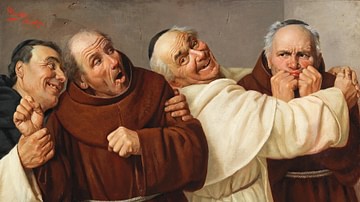
The Daily Life of Medieval Monks
Life for monks in a medieval monastery, just like in any profession or calling, had its pros and cons. While they were expected to live simply with few possessions, attend services at all hours of the day and night...

Article
Medieval Climate Anomaly in the Americas
To climatologists, the period of seven to twelve centuries ago was known as a "Climate Anomaly" or a "Warm Period" (800-1300 CE). To archaeologists, it was a time of great change, a period when cultural patterns...
