
Search
Remove Ads
Advertisement
Search Results

Article
Women in the Byzantine Empire
Women in the Byzantine Empire (4th to 15th century CE) were, amongst the upper classes, largely expected to supervise the family home and raise children while those who had to work for a living did so in most of the...

Interview
Interview: Empire of the Black Sea by Duane Roller
Multiple Fulbright Award-winning Duane Roller joins us to talk about his new book, Empire of the Black Sea. The first thorough analysis in English of the dynasty as a whole, Empire of the Black Sea...

Article
Women in the Mongol Empire
Women in the Mongol Empire (1206-1368 CE) shared the daily chores and hardships of steppe life with men and were largely responsible for tending animals, setting up camps, childrearing, producing food and cooking it. Having...

Article
Food & Drink in the Mongol Empire
The diet of the Mongols was greatly influenced by their nomadic way of life with dairy products and meat from their herds of sheep, goats, oxen, camels, and yaks dominating. Fruit, vegetables, herbs, and wild game...

Article
The Nerge: Hunting in the Mongol Empire
The peoples of the Mongol Empire (1206-1368 CE) were nomadic, and they relied on hunting wild game as a valuable source of protein. The Asian steppe is a desolate, windy, and often bitterly cold environment...

Article
Pilgrimage in the Byzantine Empire
Pilgrimage in the Byzantine Empire involved the Christian faithful travelling often huge distances to visit such holy sites as Jerusalem or to see in person relics of holy figures and miraculous icons on show from...

Definition
Ancient Persian Art and Architecture
Persian art and architecture in the present day is associated with the nation of Iran and usually designated as beginning with the Achaemenid Empire (c. 550-330 BCE) but has an even longer history with its origins...

Article
The Integration of Church and State in the Roman Empire
In the ancient world, "religion" and society were not separate entities. Various gods dictated covenants, "law-codes," and social conventions. Such law-codes were most often the responsibility of...

Article
Capitals of the Roman Empire: Constantinople & Rome
Constantinople at first had much in common with the temporary capitals of the 2nd and 3rd century CE and the tetrarchic capitals. It was an existing city of medium size, well located on the road network...
Article
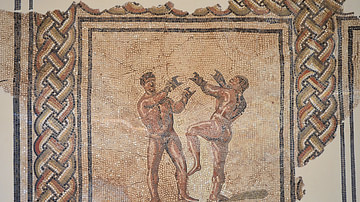
Boxing in the Roman Empire
Boxing is one of the oldest sports in the world that is still practiced today. Included in the original athletic contests of the Olympic Games, pugilism or boxing was well known and loved by the ancient Greeks and Romans...
