
Search
Did you mean: Hatti?
Remove Ads
Advertisement
Search Results

Article
The Gold of the Conquistadors
The staggering quantity of gold the conquistadors extracted from the Americas allowed Spain to become the richest country in the world. The thirst for gold to pay for armies and gain personal enrichment resulted in waves of expeditions of...

Article
Ten Great Slave Revolts in Colonial America and the United States
There were 250-311 slave revolts in Colonial America and the United States between c. 1663 and c. 1860 as defined by scholar Herbert Aptheker (l. 1915-2003), but, almost certainly, many more that were not reported, as news of an uprising...

Article
Ten Notorious French Pirates
Piracy has involved many nationalities over the centuries, but one of the prominent groups in the medieval and early modern periods was the French pirates, who terrorised the Atlantic, the Caribbean, and the Indian Ocean. French writers often...

Article
Slavery in Plantation Agriculture
The first plantations in the Americas of sugar cane, cocoa, tobacco, and cotton were maintained and harvested by African slaves controlled by European masters. When African slavery was largely abolished in the mid-1800s, the center of plantation...
Article
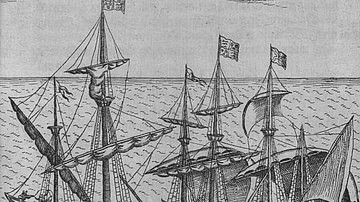
The Sea Dogs - Queen Elizabeth's Privateers
The sea dogs, as they were disparagingly called by the Spanish authorities, were privateers who, with the consent and sometimes financial support of Elizabeth I of England (r. 1558-1603 CE), attacked and plundered Spanish colonial settlements...
Image
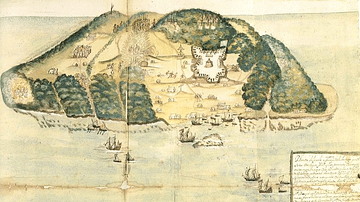
17th Century Tortuga
A 17th-century illustration of the buccaneer and pirate base of Tortuga, located on the northwest coast of Hispaniola (modern Haiti and the Dominican Republic).
Image
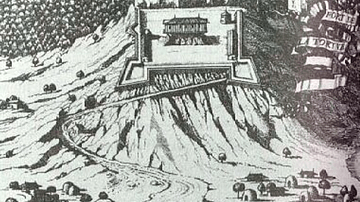
Vasseur's Fortress, Tortuga
The fortress built by Jean Le Vasseur from 1642 on the island of Tortuga (Ile de la Tortue), located in northwest Hispaniola (modern Haiti and the Dominican Republic). Tortuga became a major haven for the buccaneers like François L'Olonias...

Video
Christopher Columbus: Life and Voyages in the Age of Exploration
Christopher Columbus was born in 1451 CE and died in 1506 at the age of 54. He became famous during his lifetime as the man who discovered the ‘new world’ - understood as the Americas generally during the Age of Exploration. Since the 19th...
