
Search
Remove Ads
Advertisement
Search Results

Article
The Greek Strategy at the Battle of Salamis 480 BCE
The history of the second Persian war as presented in most of the modern literature is solely based on Herodotus' Histories. However, Herodotus' narration seems to contain several unrealistic elements...
Collection
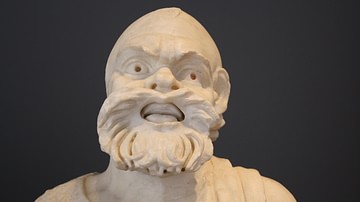
Comedy & Tragedy: the Drama of Greek Theatre
Greek theatre likely sprang from the lyrical performance of ancient epic poetry and the rituals performed in the worship of the god Dionysos where goats were sacrificed and participants wore masks. From...

Article
A Visual Who's Who of Greek Mythology
Achilles The hero of the Trojan War, leader of the Myrmidons, slayer of Hector and Greece's greatest warrior, who sadly came unstuck when Paris sent a flying arrow guided by Apollo, which caught him in his...
Article
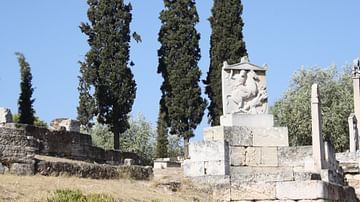
The Dexileos Stele: A Study of Aristocracy and Democracy in Greek Art
The Dexileos Stele assesses the way that Athenian political thought penetrated all levels of society, showing the conflict that the aristocratic classes were faced with in trying to find...
Definition
Battle of Salamis
The Battle of Salamis was a naval battle between Greek and Persian forces in the Saronic Gulf, Greece in September 480 BCE. The Greeks had recently lost the Battle of Thermopylae and drawn the naval Battle at Artemision, both...
Article
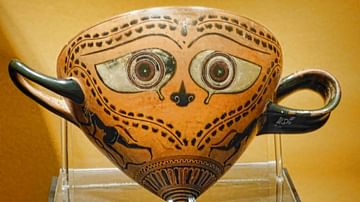
Greek Vase Painters & Potters
We know the names of some potters and painters of Greek vases because they signed their work. Generally a painter signed his name followed by some form of the verb 'painted', while a potter (or perhaps the painter writing...

Article
Elephants in Greek & Roman Warfare
In the search for ever more impressive and lethal weapons to shock the enemy and bring total victory the armies of ancient Greece, Carthage, and even sometimes Rome turned to the elephant. Huge, exotic, and frightening...

Article
Greek vases: names, shapes and functions
The system of names used today for Greek vases has quite rightly been described by one leading scholar as 'chaotic'. Many of the names were first applied in the eighteenth and nineteenth centuries by scholars...

Article
The Hellenistic World: The World of Alexander the Great
The Hellenistic World (from the Greek word Hellas for Greece) is the known world after the conquests of Alexander the Great and corresponds roughly with the Hellenistic Period of ancient Greece...

Article
Wihio Tales
Wihio tales are the Cheyenne legends featuring the trickster figure Wihio, who appears, variously, as a wise man, fool, villain, or hero and is associated with the spider. Wihio Tales continue to be as popular with the Cheyenne today...
