
Search
Remove Ads
Advertisement
Search Results

Image
Elizabethan Trencher Plate
An Elizabethan trencher (wooden plate) with lid. c. 1600 CE. (British Museum, London)
Image
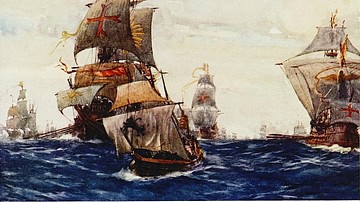
Elizabethan Royal Navy
A 1907 CE painting showing ships of the English Royal Navy during the Elizabethan period (1558-1603 CE).

Image
Earliest Abbasid Era Manuscript
This 13th Century CE Arabic manuscript is the earliest manuscript from the Abbasid era (750-1258 CE). The Abbasids initiated a cascade of translation activities to preserve and further aggrandize western and eastern knowledge. Part of the...

Image
Sassanian-era Cataphract
Historical reenactment of a Sassanian-era cataphract, complete with a full set of scale armor for the horse.

Image
Clay Mask from the Old Babylonian Era
A clay mask depicting a face with acting expressions. Mesopotamian art usually portrays human faces in a poker-like configuration. This one has 3 small holes at the upper part which might have been used to attach it to a necklace with the...
Image
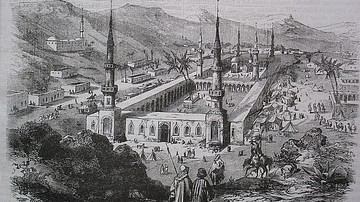
Prophetic Mosque in Medina, Ottoman Era
A 19th Century CE drawing of the Mosque of the Prophet (Arabic: Al-Masjid an-Nabawī) in Medina, Saudi Arabia. The Mosque of the Prophet was originally founded in 622 CE by Prophet Muhammad, and underwent numerous expansions and renovations...

Image
Rashidun-era Islamic Coin
Islamic coin of Arab-Sasanian origin. From Bishapur, Persia. Made c. 651-661 CE, during the Rashidun Caliphate. Left: Sasanian style bust imitating Kosrau II (r. 590-628 CE). Right: Fire altar with ribbons and attendants, star and crescent...
Image
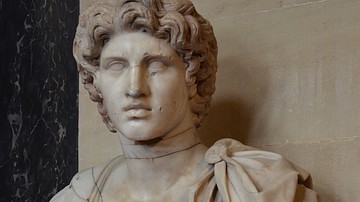
Alexander the Great, Roman Era bust
Roman bust of Alexander the Great, excavated from the ruins of Herculaneum. (Blenheim Palace Oxfordshire, UK)
Image
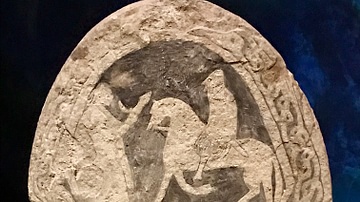
Viking Era Broa Stone
More than a thousand years ago, Vikings living on the Swedish Island of Gotland erected carved stone slabs to commemorate fallen warriors and heroic deeds. This stone is called the "Broa Stonem" and it dates to c. 700-800 CE. Today, these...

Image
The Heian-era Byodoin Temple
The Byodoin Temple in Uji, Japan dates from the late-Heian period, and it served as the residence of the influential minister Fujiwara no Michinaga (966-1028 CE). It was originally built in 998 CE. The most famous portion of the temple is...
