
Search
Remove Ads
Advertisement
Search Results

Definition
Gracchi Brothers
Tiberius Sempronius Gracchus (c. 163-133 BCE) and his younger brother Gaius (c. 154-121 BCE) were tribunes of the plebs in the Roman Republic. Serving in 133 BCE, Tiberius introduced a land reform but was beaten to death after his term. Eleven...

Definition
Sardis
Sardis (near modern-day Sart, Turkey) was the capital of the ancient Kingdom of Lydia founded (according to Herodotus) by the Heracleidae, the Heraclid Dynasty descended from the hero Heracles (Hercules). The city was famous in antiquity...

Definition
Hellenistic Astrology
Hellenistic astrology encompassed various forms of divination in Greece and the Mediterranean, all linked to the observation of astronomical phenomena. Hellenistic astrology was based on the belief that the stars and planets could either...

Definition
Cleopatra of Macedon
Cleopatra of Macedon (355/4-308 BCE), daughter of Philip II of Macedon (reign 359-336 BCE) and his Molossian queen, Olympias of Epirus (c. 375-316 BCE), was the only full sister of Alexander the Great (reign 336-323 BCE). Born in Pella, the...

Definition
Alaric
Alaric I (r. 394-410 CE) was a Gothic military commander who is famous for sacking Rome in 410 CE, which was the first time the city had been sacked in over 800 years. Although little of his family is known, we do know that he became the...

Article
The Brothers Gracchi: The Tribunates of Tiberius & Gaius Gracchus
Tiberius and Gaius Gracchus were a pair of tribunes of the plebs from the 2nd century BCE, who sought to introduce land reform and other populist legislation in ancient Rome. They were both members of the Populares, a group of politicians...

Article
Top 10 Archaeological Sites in Caria, Turkey
Located at the crossroads of many ancient civilizations, Turkey is a haven for archaeology lovers. Over the centuries, a succession of empires and kingdoms – Hittite, Lydian, Persian, Greek, Roman, Byzantine and, finally, Ottoman – ruled...
Article
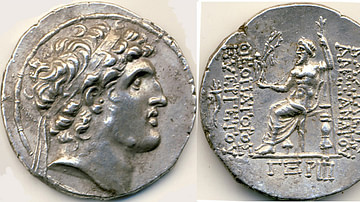
Alexandros I Balas
Alexandros I Balas was a Seleucid king from 152 BC to 145 BCE. As the Seleucid king Demetrius I Soter (162-150 BCE) became more and more unpopular due to his arrogance and drunkenness, it was quite an easy task for the rival kingdoms, such...
Image
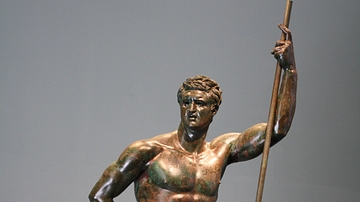
The Hellenistic Prince
The 2nd century BCE bronze statue known as 'The Hellenistic Prince'. The statue perhaps represents Attalus II, king of Pergamon. The head may also be a portrait of an unknown wealthy Roman, eager to appear as a Hellenistic prince. The work...

Image
Galatian
Marble head of a Galatian. Early 2nd century CE copy of an original from an altar at Pergamon to commemorate Attalus I's victory over the Galatians in 230 BCE. (Vatican Museums, Rome)
