
Search
Remove Ads
Advertisement

 This answer was generated by
 Search Results

Definition
Yang Zhu
Yang Zhu (l. 440-360 BCE, also known as Yang Chou or Yang Chu) was a hedonist philosopher who lived and wrote during The Warring States Period in China. Little is known of his life but his work survived through the writings of the great...

Definition
Hongwu Emperor
The Hongwu Emperor (r. 1368-1398 CE) was the founder of the Ming dynasty (1368-1644 CE) which took over from the Mongol Yuan dynasty (1276-1368 CE) as the rulers of China. Born a peasant with the name Zhu Yuanzhang, the future...

Definition
Ming Dynasty
The imperial Ming dynasty ruled China from 1368 to 1644. It replaced the Mongol Yuan dynasty which had been in power since the 13th century. Despite challenges from abroad and within, the Ming dynasty oversaw an unprecedented growth...
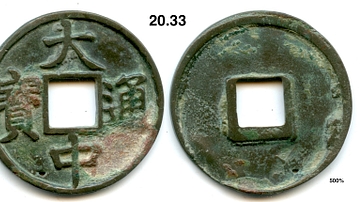
Image
Coin of Zhu Yuanzhang
A bronze coin of Zhu Yuanzhang, the future Hongwu Emperor (r. 1368-1398 CE) who was the founder of the Ming Dynasty (1368-1644 CE).

Definition
Yuan Dynasty
The Yuan Dynasty was established by the Mongols and ruled China from 1271 to 1368. Their first emperor was Kublai Khan (r. 1260-1294) who finally defeated the Song Dynasty which had reigned in China since 960. Stability and peace...

Definition
Yongle Emperor
The Yongle Emperor (aka Chengzu or Yung Lo, r. 1403-1424 CE) was the third ruler of the Chinese Ming Dynasty (1368-1644 CE). Inheriting a stable state thanks to the work of his father, the Hongwu Emperor (r. 1368-1398 CE), Yongle...

Definition
Jianwen Emperor
The Jianwen Emperor (r. 1398-1402 CE) was the second ruler of the Chinese Ming dynasty (1368-1644 CE). Following a civil war and Jianwen's mysterious disappearance, his uncle took over the throne and ruled as the Yongle Emperor...

Definition
Ancient Chinese Philosophy
The term Ancient Chinese Philosophy refers to the belief systems developed by various philosophers during the era known as the Hundred Schools of Thought when these thinkers formed their own schools during the Spring and...

Article
Pigs in Ancient China
Pigs (sometimes called “suids” of the suidae family) have long played an important part in Chinese culture. Pigs symbolize good fortune and happiness as they seem to live a care-free existence and have a long relationship...

Definition
Tang Dynasty
The Tang Dynasty (618-907 CE) was one of the greatest in Imperial Chinese history. It was a golden age of reform and cultural advancement which lay the foundation for policies which are still observed in China today. The second emperor...
