
Search
Did you mean: Wall?

 This answer was generated by
 Search Results

Image
Well and Bathing Platform, Harappa
Well and Bathing Platform, Harappa, 2200-1900 BCE.
Image
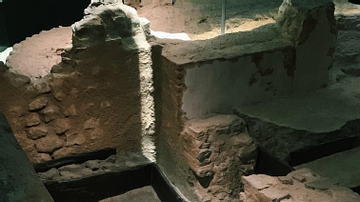
Well at the London Mithraeum
The well at the Mithraeum in London. The Mithraeum was built on the banks of the Walbrook river around 240 CE and was abandoned sometime during the fall of the Roman Empire (5th century CE).
Image
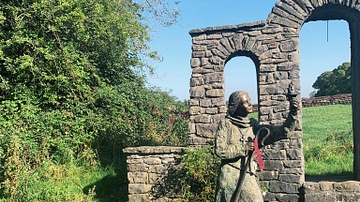
Statue of Brigid at Saint Brigid's Well, Kildare
Saint Brigid's Well, Kildare, believed to be the well used by Brigid herself and where she let her white cow drink water. The well continues to be a sacred site of pilgrimage, especially for the celebration of Imbolc on February 1st.
Image
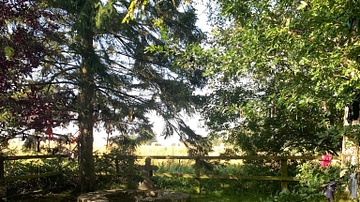
Saint Brigid's Well, Kildare
Saint Brigid's Well, Kildare, Ireland. The drinking well is believed to have been used by Brigid and her white cow. The well continues to be a pilgrimage site, especially for the celebration of Imbolc on February 1st.
Image
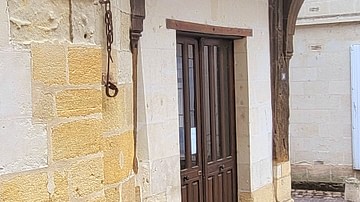
Joan of Arc Well, Chinon
Reconstruction of the well that Joan of Arc is believed to have used to get off her horse in Chinon on March 6th 1429 as she was heading to meet King Charles VII of France.
Image
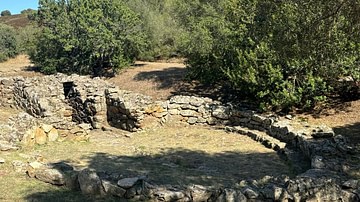
Sacred Well of Sa Testa
The Nuragic well temple of Sa Testa, located in Olbia region, Sardinia, Italy, constructed c. 1500-1200 BCE.
Image
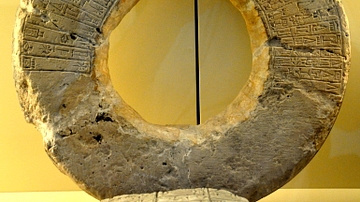
Cuneiform Inscribed Well Curb
A stone ring of a well curb with cuneiform inscriptions which mention the name of the king Shu-Sin of Ur. Ur III, 2030 BCE. From southern Mesopotamia, Iraq. (The Pergamon Museum).
Image
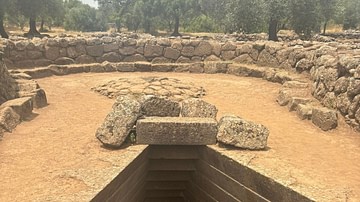
Sacred Well of Santa Cristina
The Nuragic well temple of Santa Christina, located in the Paulilatino region, Sardinia, Italy, constructed during the Early Iron Age, c. 1200-600 BCE.
Image
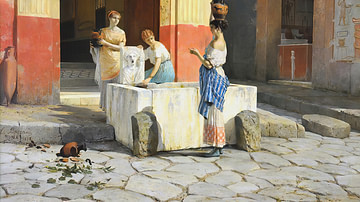
Women at a Well in Pompeii
Illustration of what life may have looked like in ancient Pompeii. "Women at the Well" by Luigi Bazzani (1836-1927), oil on woodpanel.
Image
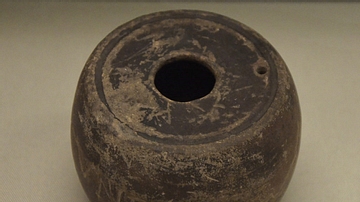
Pottery Ink-well
Pottery ink-well inscribed with the owner's name, Iucundus, from Londinium (Roman London). The ink was made up using one part of gum-water to three parts carbon black. (British Museum, London)
