
Search
Did you mean: Indra?
Remove Ads
Advertisement

 This answer was generated by
 Search Results

Article
Cultural Links between India & the Greco-Roman World
Cyrus the Great (558-530 BCE) built the first universal empire, stretching from Greece to the Indus River. This was the famous Achaemenid Empire of Persia. An inscription at Naqsh-i-Rustam, the tomb of his able successor Darius I (521-486...

Definition
Mauryan Empire
The Mauryan Empire (322 BCE - 185 BCE) supplanted the earlier Magadha Kingdom to assume power over large tracts of eastern and northern India. At its height, the empire stretched over parts of modern Iran and almost the entire Indian subcontinent...
Definition
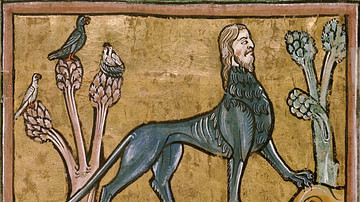
Manticore
The manticore, derived from the Early Middle Persian merthykhuwar or martiora, meaning "man-eater" (also known as a mantichora or a martichore), is a fearsome hybrid creature found in classical and medieval literature. It has the body of...

Article
The Unicorn Myth
The unicorn, a mythical creature popularized in European folklore, has captivated the human imagination for over 2,000 years. For most of that time, well into the Middle Ages, people also believed them to be real. The roots of the unicorn...

Definition
Chandragupta Maurya
Chandragupta Maurya (c. 321 - c. 297 BCE), known as Sandrakottos (or Sandrokottos) to the Greeks, was the founder of the Maurya Dynasty (4th-2nd century BCE) and is credited with the setting up of the first (nearly) pan-Indian empire. Aided...
Definition
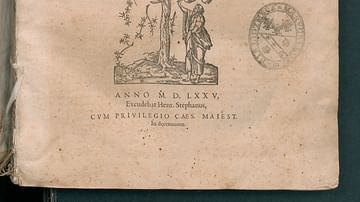
Arrian
Lucius Flavius Arrianus, commonly known as Arrian (86 - c. 160 CE) was a Greek historian, philosopher, and statesman from Nicomedia, capital of the Roman province of Bithynia. Arrian is recognized as one of the most renowned authors of the...

Article
Origins of World Agriculture
Agriculture arose independently at several locations across the world, beginning about 12,000 years ago. The first crops and livestock were domesticated in six rather diffuse areas including the Near East, China, Southeast Asia, and Africa...

Article
Greco-Bactrian and Indo-Greek Kingdoms in Ancient Texts
The rarity of the appearance of Greco-Bactrian and Indo-Greek kingdoms in ancient literature is one of the reasons why those states are so little-known today. Indo-Greek literature did exist, but none has been found that speaks about the...

Article
Depictions of India in Ancient Literature
Herodotus (484 BCE – c. 425 BCE) has been called the Father of History since he was the first historian known to collect his materials in detail, test their accuracy to a certain extent and arrange them in a well-constructed and vivid narrative...
Image
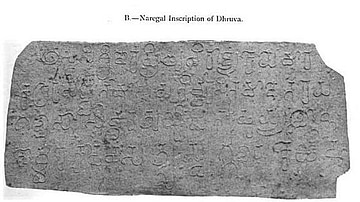
Kannada Inscription of Dhruva
Old Kannada inscription (780 CE) of Rashtrakuta King Dhruva Dharavarsha, Naregal, India.
Ref source: Epigraphia Indica and Record of the Archæological Survey of India, Volume 6, (1900), pp.162-163
