
Search

 This answer was generated by
 Search Results

Definition
Electra by Euripides
Electra is a Greek tragedy written by the playwright Euripides, c. 420 BCE. It retells the classic myth concerning the plotting of Electra and her brother Orestes to kill their mother and her lover. This version of the story should not be...

Definition
Electra by Sophocles
Electra is a play written by the 5th-century BCE Greek tragedian Sophocles. Similar to Aeschylus' Libation Bearers, Electra focuses on the return of Electra's brother Orestes from exile and the plot to murder their mother. Years earlier...

Definition
Libation Bearers
The play Libation Bearers was written by one of the greatest of all Greek tragedians Aeschylus (c. 525-455 BCE). Winning first prize at the Dionysia competition in 458 BCE, Libation Bearers was the second play in the trilogy The Oresteia...

Definition
Iphigenia in Aulis
Iphigenia in Aulis (or at Aulis) was written by Euripides, the youngest and most popular of the trilogy of great Greek tragedians. The play was based on the well-known myth surrounding the sacrifice of Agamemnon and Clytemnestra's daughter...
Image
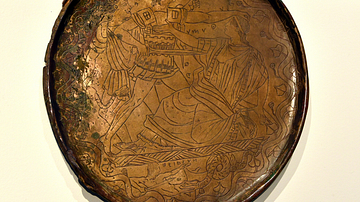
Orestes Kills Clytemnestra
On this bronze mirror, a scene is carved. It depicts the killing of Clytemnestra by her son, Orestes. Engraved around 440 BCE. Acquired in 1843 CE. It is on display at the Altes Museum in Berlin, Germany.

Definition
Agamemnon (Play)
The play Agamemnon was written by one of the greatest Greek tragedians Aeschylus (c. 525 – 455 BCE), “Father of Greek Tragedy.” Older than both Sophocles and Euripides, he was the most popular and influential of all tragedians of his era...
Definition
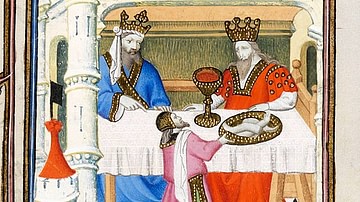
Atreus
Atreus was the mythical Greek king of Mycenae. He is perhaps best known for being the father of Agamemnon and Menelaus, two heroes of the Trojan War, as well as for the terrible curse placed upon his family. This was a hereditary curse, plaguing...
Definition
The Eumenides
The Eumenides is a play written by Aeschylus (c 525 – 455 BCE), the “Father of Greek Tragedy,” the most popular and influential of all tragedians of his era. The Eumenides was the third play of a trilogy, The Oresteia, with the remaining...

Definition
Agamemnon (Person)
Agamemnon was the legendary king of Mycenae and leader of the Greek army in the Trojan War of Homer's Illiad. Agamemnon is a great warrior but also a selfish ruler who famously upset his invincible champion Achilles, a feud that prolonged...

Article
A Visual Who's Who of Greek Mythology
Achilles The hero of the Trojan War, leader of the Myrmidons, slayer of Hector and Greece's greatest warrior, who sadly came unstuck when Paris sent a flying arrow guided by Apollo, which caught him in his only weak spot, his heel. Adonis...
