
Search
Remove Ads
Advertisement

 This answer was generated by
 Search Results
Image
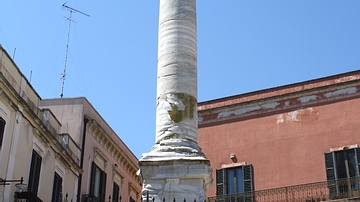
End of the Appian Way Column Marker
A 19.2 m marble column which dates to the 1st century BCE and was part of an honorary monument in Brindisum. Traditionally, the column was thought to mark the end of the Roman road the via Appia (Appian Way) but inscriptions on the column...

Article
The Spartacus Revolt
The revolt of the gladiator Spartacus in 73-71 BCE remains the most successful slave revolt in the history of Rome. The rebellion is known as the Third Servile War and was the last of three major slave revolts which Rome suppressed. The story...
Article
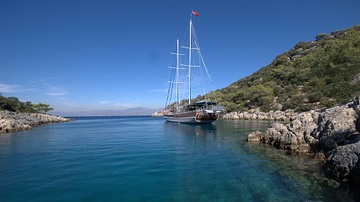
Travelling Along the Lycian Way
The Lycian Way follows over 540km (335 miles) of ancient roadways, mule tracks and shepherds' paths along one of Turkey's most remote and untouched coastlines. Theresa Thompson discovers the joys of following the trail and finding the ancient...

Article
Opening the Way to India
Possibly being overjoyed by the tales of mythical exploits of Heracles, Semiramis, the fabled queen of Assyria, Cyrus, King of Persia and so on, Alexander the Great set out from the tiny kingdom of Macedon for a daring adventure, unheard...
Image
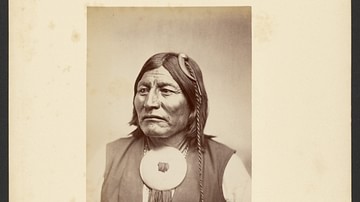
War Chief Mow-way
Mow-way (c. 1825-1886), the principal leader and war chief of the Kotsoteka band of the Comanche during the 1860s and 1870s, photograph by William Stinson Soule, 1869-1874.
J. Paul Getty Museum, Los Angeles.
Image
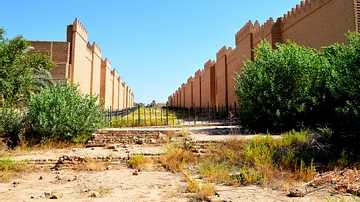
The Processional Way of Babylon
This is part of the processional way (or street) at the ancient city of Babylon, in modern-day Iraq. The way and its tiles are original but the flanking buildings are modern ones (which were built in the 1980s CE by Saddam Hussein, former...

Image
The Milky Way Over Uluru
The Milky Way over Uluru. The Dreaming, according to Carl Strehlow, sees the Milky Way as a river connected to the dwelling of a Creator Deity.
Image
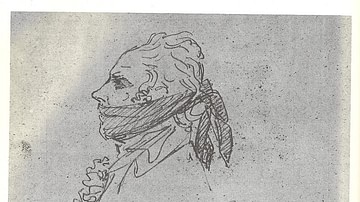
Sketch of Robespierre on the Way to the Guillotine
Sketch of Maximilien Robespierre on the way to the guillotine, 28 July 1794, attributed to Jacques-Louis David.
Morgan Library & Museum, New York.

Image
The Panathenaic Way, Athens, Greece
The Panathenaic Way was the road leading from the main gate of Athens up to the Acropolis and built for the purpose of the great Panathenaia religious festival.
Image
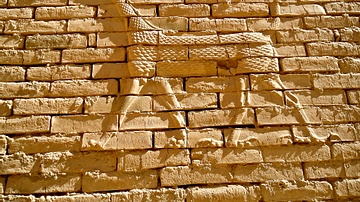
Mušḫuššu at the Processional Way of Babylon
This is a mušḫuššu (or dragon), the symbol of the god Marduk, at the processional way (or street) of the ancient city of Babylon, in modern-day Iraq. Neo-Babylonian period, reign of Nebuchadnezzar II, 6th century BCE.
